Astronomers have detected a chemical compound on a planet outside the Solar System that may indicate the existence of life. This concerns the exoplanet K2-18b, located 120 light-years from Earth in the constellation Leo. Repeated observations using the "James Webb" telescope revealed the presence of dimethyl sulfide in the atmosphere - a molecule that is produced exclusively by living organisms on Earth, particularly by marine algae.
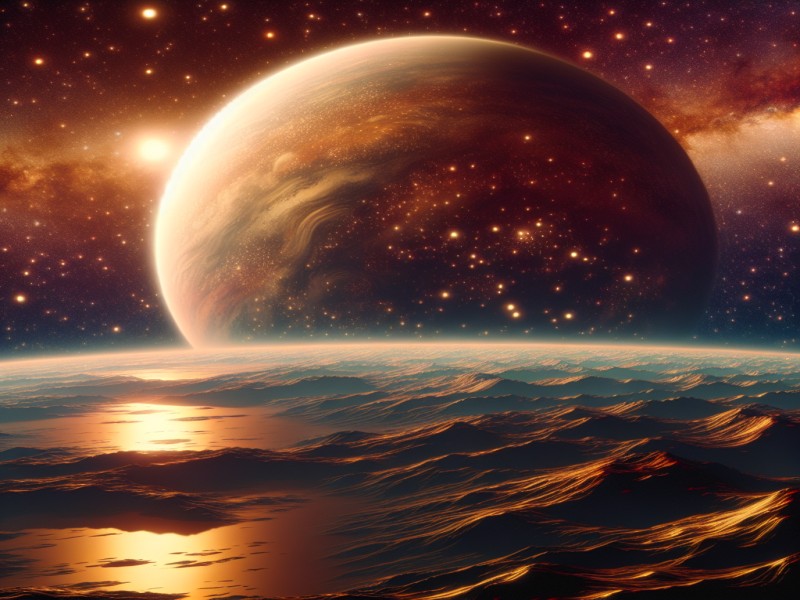
Article image generated by artificial intelligence
According to the lead researcher, astrophysicist Nikku Madhusudhan from the University of Cambridge, this data may indicate that K2-18b is covered by a warm ocean where life could exist. The scientist described the ongoing developments as a "revolutionary moment" and emphasized that this is the first time humanity has detected possible biosignatures on a potentially habitable planet.
K2-18b was discovered in 2017 and belongs to the so-called sub-Neptunes - planets that are larger than Earth but smaller than Neptune. In 2021, Madhusudhan's research team introduced a new term for such objects - hycean planets, combining the words "hydrogen" and "ocean." Scientists suggested that they may have warm water surfaces and hydrogen-rich atmospheres.
The first mention of dimethyl sulfide on K2-18b appeared back in 2023, but the signal was too weak. In subsequent observations conducted with another instrument on board the telescope, a more pronounced presence of not only dimethyl sulfide but also its related compound - dimethyl disulfide - was detected. The concentration of dimethyl sulfide on the planet, according to scientists' calculations, may exceed Earth's level by thousands of times.
However, other researchers urge caution. Some believe that K2-18b may not be a water world but rather a molten rocky mass with a dense hydrogen atmosphere - conditions incompatible with life. Laboratory experiments and further observations are needed to confirm the hypothesis and determine how these molecules behave under exoplanet conditions.
Despite the debates, scientists believe that the new data from K2-18b opens a promising direction in the search for extraterrestrial life. If the assumptions are confirmed, humanity could take an important step toward understanding how populated our galaxy is.
We and selected third parties use cookies or similar technologies for technical purposes and, with your consent, for other purposes (“basic interactions & functionalities” and “measurement”) as specified in the Cookie policy.
You can freely give, deny, or withdraw your consent at any time.
You can consent to the use of such technologies by using the “Accept” button. By closing this notice, you continue without accepting.
 TGLIST.COM.UA

Comments
No comments
Add Comment