Its melting could significantly raise global sea levels.
Scientists from MELT, one of the projects of the UK and US International Collaboration studying the Thwaites Glacier, have found that while overall melting is occurring more slowly than expected, the process of destruction in the cracks has accelerated. The research results were published in the journal Nature.
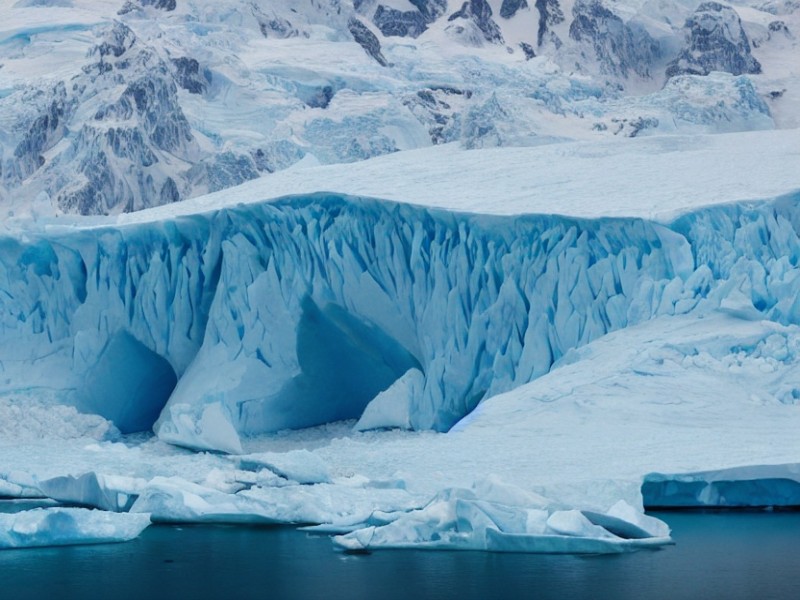
Article image generated by artificial intelligence
In other words, one of the most dangerous glaciers on Earth is losing mass primarily from the inside rather than the outside. This is due to the accumulation of salt in the crevices. The unexpected discovery raises concerns among scientists, as it significantly accelerates the destruction of the so-called "Doomsday Glacier."
New data was obtained thanks to the modern robot Icefin, which allowed researchers to penetrate 607 meters deep into the glacier and study its base as well as the crevices.
The Thwaites Glacier is about 120 kilometers wide - the largest on Earth and one of the most fragile in West Antarctica. Besides its size, comparable to the area of the United Kingdom, it is also known for its rapid movement. It is estimated that its complete disappearance could raise global sea levels by approximately 0.61 meters, which could subsequently lead to a sea level rise of up to three meters.
We and selected third parties use cookies or similar technologies for technical purposes and, with your consent, for other purposes (“basic interactions & functionalities” and “measurement”) as specified in the Cookie policy.
You can freely give, deny, or withdraw your consent at any time.
You can consent to the use of such technologies by using the “Accept” button. By closing this notice, you continue without accepting.
 TGLIST.COM.UA
Comments
No comments
Add Comment