An unusual mechanism helped her lay eggs inside living creatures.
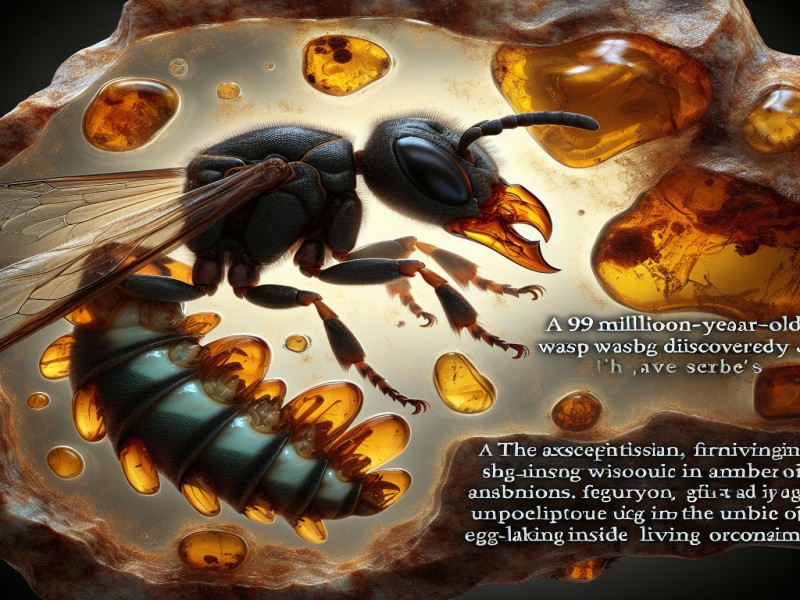
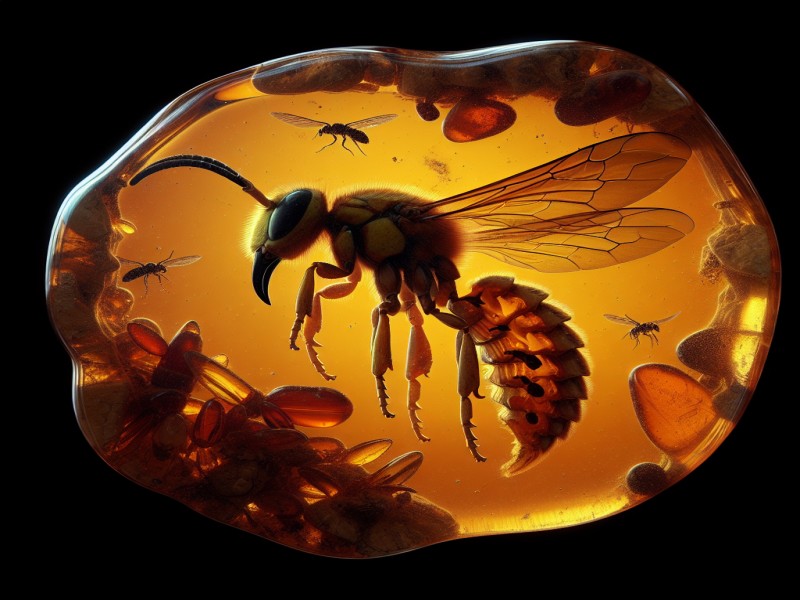
Scientists discovered in Burmese amber, dated to 99 million years ago, 16 female wasps with a unique body structure that has no analogs among known insects. Its abdomen resembles the trapping mechanism of the Venus flytrap - a carnivorous plant that captures prey with specialized lobes. The species has been named Sirenobethylus charybdis.
Article image generated by artificial intelligence
These lobes, covered with bristles, were found in various positions in different specimens, indicating their mobility and grasping function. Scientists suggest that the unusual mechanism helped the wasps lay eggs inside living hosts, temporarily immobilizing them.
Similar parasitic wasps exist today, but they use their front legs to secure their victims, whereas in Sirenobethylus charybdis, this role was performed by the rear part of the body. Researchers believe that the wasp could lie in wait and respond to the touch of a potential host, instantly gripping it with its abdomen.
It remains unknown whether such a mechanism existed in males or if it was exclusively used by females for laying eggs. However, if the theory is confirmed, it will help better understand the evolution of parasitic wasps.
We and selected third parties use cookies or similar technologies for technical purposes and, with your consent, for other purposes (“basic interactions & functionalities” and “measurement”) as specified in the Cookie policy.
You can freely give, deny, or withdraw your consent at any time.
You can consent to the use of such technologies by using the “Accept” button. By closing this notice, you continue without accepting.
 TGLIST.COM.UA
Comments
No comments
Add Comment