Missions to other planets will no longer take many years.
One of the main obstacles to human flights to Mars is the time required to carry out such missions with the current technology. A flight to the Red Planet and back would take about two years. Manned missions of such duration have not yet been conducted, raising questions about how humans can endure such lengthy expeditions: both physically and psychologically. Additionally, the risk of severe radiation exposure increases during such a long flight, especially if entering a coronal mass ejection zone from the Sun.
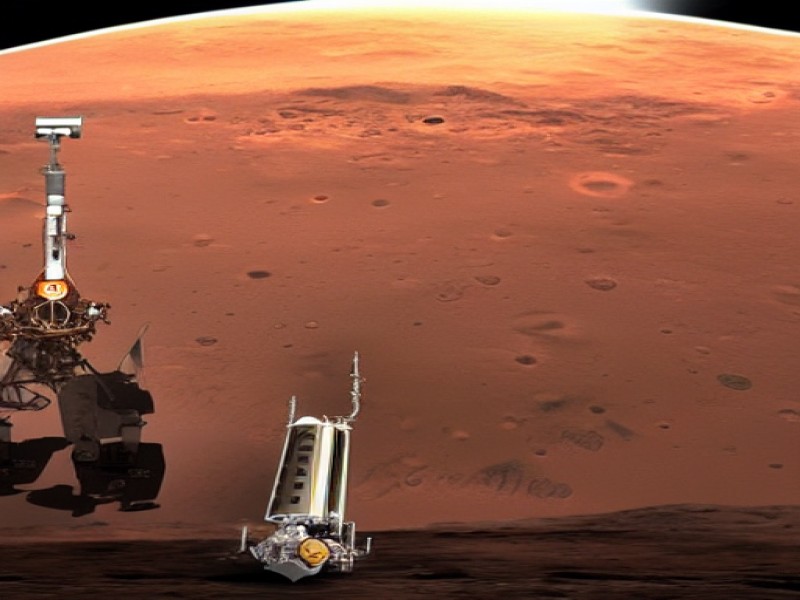
Article image generated by artificial intelligence
Accelerating the flight could alleviate many issues for the expedition. For this, engines utilizing new technologies are needed. Howe Industries is working on such engines. Among other startups, it has attracted attention by securing investments from NASA. The agency has taken a serious interest in this company's project.
They propose to create a plasma pulse rocket (PPR). Howe Industries believes that such a system can be realized with the current level of technological development. It would combine two critically important components for space engines: high thrust (up to 100,000 N) and high specific impulse (up to 5,000 seconds).
The concept envisions that such a rocket could accelerate a crewed spacecraft, even with a massive radiation protection system, to 160,000 km/h. However, this raises the question of effective braking when the spacecraft approaches Mars. Howe Industries must address this challenge, along with other design and energy issues, with NASA's support.
So far, the agency is cautiously investing in the project. $725,000 has been allocated to provide a general outline of the concept while addressing critical elements. Funding for the PPR is being conducted under the Innovative Advanced Concepts (NIAC) program, which is designed to evaluate external ideas that may seem fantastical at first glance but have a certain chance of realization.
The authors of the idea acknowledge that even after completing the initial stages of project research, approximately 20 years will be needed before launching a real mission. However, with the implementation of plasma pulse engine technology of such power, entirely new possibilities in space travel will open up. Sending missions even to the outskirts of the Solar System will become a simpler task.
We and selected third parties use cookies or similar technologies for technical purposes and, with your consent, for other purposes (“basic interactions & functionalities” and “measurement”) as specified in the Cookie policy.
You can freely give, deny, or withdraw your consent at any time.
You can consent to the use of such technologies by using the “Accept” button. By closing this notice, you continue without accepting.
 TGLIST.COM.UA

Comments
No comments
Add Comment