Another turning point for the climate. The Arctic Ocean will no longer be as icy.
The increase in average temperature on Earth is occurring unevenly. It is rising fastest in the Arctic, where permafrost is rapidly melting. Another consequence of warming is the reduction of sea ice extent in the Arctic Ocean. The trend of its decline is persistent, and almost every year in August and September, the areas covered by ice are getting smaller and smaller, setting new records.
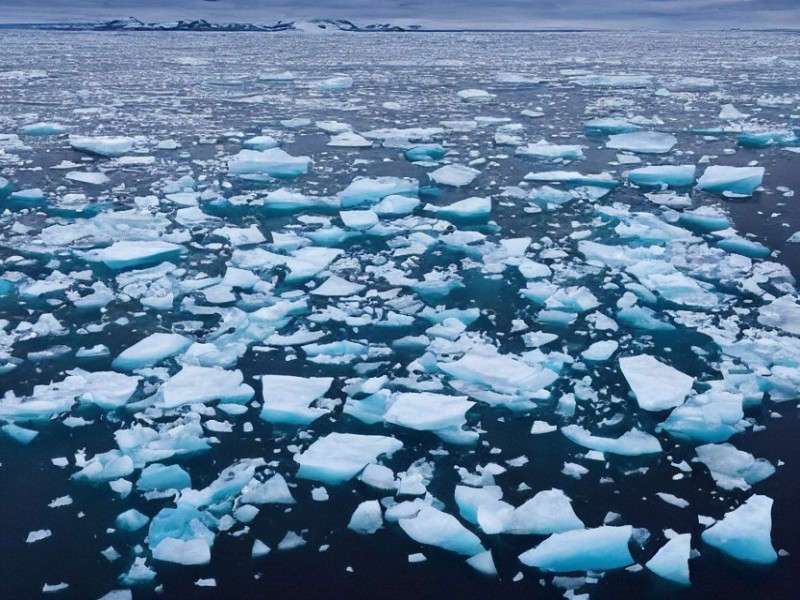
Article image generated by artificial intelligence
A new study published in Nature Reviews Earth & Environment shows that this decade will witness days when the Arctic will be free of sea ice. By mid-century, it will be ice-free for a month (in September), and by the end of the century, for several months.
These predictions are more pessimistic than previous estimates, which indicated that there would be no days without Arctic sea ice by the end of the 2030s. However, every decade, the Arctic Ocean loses about 12.2 percent of its ice area, and it has already reached a critical threshold.
Technically, waters in the Arctic will be considered ice-free when the area of floating ice cover falls below 1 million square kilometers. This means that individual ice floes and groups of floes may still be scattered across the ocean. However, there will be no structured coverage to speak of. For comparison, the average annual ice extent of the Arctic Ocean is 15.5 million square kilometers. Thus, the seasonal reduction appears significant.
Why does the loss of ice in the Arctic concern scientists so much? It's not just that it is extremely important for many species living in northern regions. Polar ice has a high reflectivity and plays a crucial role in Earth's radiation balance, preventing heating from solar rays. The reduction of this "mirror" triggers a chain reaction, where warming increases, accelerating further ice melt.
Moreover, changes in the radiation balance and the influx of large volumes of meltwater into the global ocean system can impact currents. This will alter the climate of Europe and northern regions, making it more unpredictable and potentially provoking natural disasters.
We and selected third parties use cookies or similar technologies for technical purposes and, with your consent, for other purposes (“basic interactions & functionalities” and “measurement”) as specified in the Cookie policy.
You can freely give, deny, or withdraw your consent at any time.
You can consent to the use of such technologies by using the “Accept” button. By closing this notice, you continue without accepting.
 TGLIST.COM.UA

Comments
No comments
Add Comment