Gaming
Amazon's Clearer Gaming Strategy
4 min read
07.06.2026
Amazon refocuses gaming: Luna as platform, studios for IP-driven games, AI tools, and cross-media tie-ins with Tomb Raider and Bond.
Amazon's gaming strategy: a clearer focus amid experimentation
Amazon's gaming approach has shifted from broad experimentation to a more focused strategy — but the company still explores multiple fronts. Over the last several years Amazon has acquired Twitch, launched the Luna cloud service, invested in MMOs during the live-service boom, and leveraged IP from Prime Video and MGM. Recently the company relaunched Luna to emphasize party and casual games you can play with a phone as a controller, including an AI-powered title starring Snoop Dogg.
Why the pivot matters
On the surface the shift away from large MMOs looked like a retreat. Amazon disagrees. Jeff Gattis, GM of Amazon Games, told The Verge that the company now has a simpler, clearer structure and a more targeted audience focus. He says the change isn't an exit from gaming but a rebalancing toward where Amazon believes it can grow.
"The reality is nothing could be further from the truth, but we haven't really got out and said that." — Jeff Gattis, GM of Amazon Games
New structure: platform and studios
Amazon reorganized its gaming groups into a single organization. It now treats Luna as the gaming platform and Amazon Game Studios as the development and publishing arm. That mirrors other ecosystems like Xbox, which separates platform and studio functions. The consolidation combined Prime Gaming, Amazon Game Studios, and Luna into one unit to better align strategy and development.
Product offering and business model
Luna offers a tiered model. A select batch of games — including GameNite party titles — are available with an Amazon Prime subscription. Luna Premium costs $9.99 per month for a larger catalog. This mixed approach targets both Prime subscribers and paying cloud-gaming customers.
Target audiences: core vs casual
Previously Amazon chased "core" gamers, but Gattis argues that consoles and PC stores already serve that segment well. Amazon isn't abandoning core players, but it now sees opportunity in a more casual audience that wants accessible, social, cloud-streamed experiences similar to Netflix's gaming experiments.
Key projects and IP strategy
Amazon is betting on major franchises and cross-media tie-ins to drive engagement. Its best-known upcoming projects are a Tomb Raider remake, "Tomb Raider: Legacy of Atlantis," and a new entry, "Tomb Raider: Catalyst," both slated for 2027. Amazon is also developing a live-action Tomb Raider series for Prime Video, starring Sophie Turner.
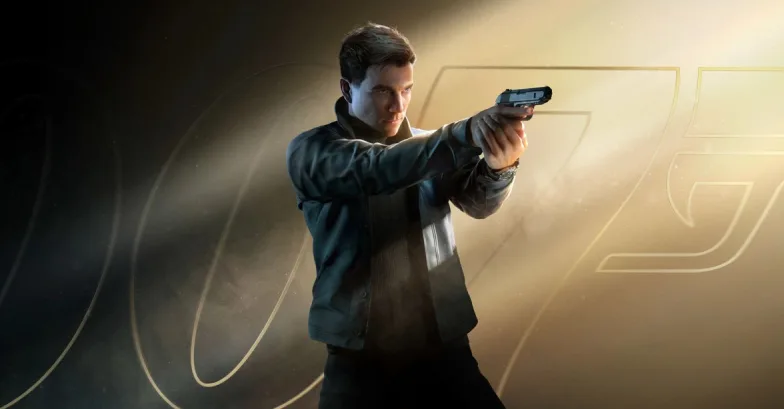
The company's control of high-profile IPs — including newly acquired rights to James Bond — points to a strategy of weaving games into a wider entertainment ecosystem. Gattis describes a model where viewers watch a Prime Video film, play a companion game on Luna, and buy related merchandise on Amazon.com.
"We really believe that the line between TV and video games is increasingly coming together." — Jeff Gattis
IO Interactive's 007 First Light is an example. It launched before Amazon owned the Bond IP, but Amazon now holds rights to future Bond titles and expects the next Bond game to be published by Amazon Game Studios.
Development slate and AI use
Gattis says Amazon has 10 to 15 games in development, with roughly 33–40% being AAA projects. At the same time, Amazon can produce quick-turn social games — the Snoop Dogg party title was assembled in under a year. Amazon also embraces generative AI as a development tool: using AI to accelerate workflows, aid content creation, and power in-game features, while maintaining human-led design teams.
Crystal Dynamics confirmed AI-assisted tools on the Tomb Raider reboot, and Amazon stresses it has not cut staff because of AI usage.
Challenges and outlook
Scale and access don't guarantee success. Netflix has had mixed results entering games. Amazon's broader entertainment reach — Twitch, Prime Video, MGM, and e-commerce — gives it unique advantages, but it will still take time to discover which approaches stick.
Amazon appears to be pursuing a hybrid tactic: continue investing in AAA and franchise titles while experimenting with lightweight, social, cloud-based games that can reach casual audiences through Prime and Luna. Gattis is confident: "Don't sleep on Amazon in this space."
What this means for gaming news readers
- Expect more cross-media tie-ins: games tied to Prime Video series and films.
- Look for both big-budget Tomb Raider and Bond projects and rapid-turn party games on Luna.
- Watch how Amazon uses AI both as a design tool and as an in-game feature.
- Monitor Luna's subscription strategy and its role within Prime memberships.
Overall, Amazon's gaming approach is shifting from scattershot moves to a clearer platform-plus-studios model, mixing large franchise investments with fast, social gaming experiments. For gaming news followers, Amazon's next steps — particularly around Bond and Tomb Raider — will be key indicators of how well this strategy performs.
 TGLIST.COM.UA
Comments
No comments
Add Comment