Tech
Why Graduations Booed AI — Campus Reactions
4 min read
24.05.2026
Graduation speeches about AI drew boos as students express job worries, distrust of tech, and fears about the future. What this means for campuses and industry.
Graduation boos, AI anxiety, and the mood on campus
Commencement season is back — and at some ceremonies this year, speakers who praised artificial intelligence met an unexpected reaction: boos. Several high-profile commencement addresses suggest many graduates feel uneasy about a future shaped by AI, automation, and widening economic uncertainty.
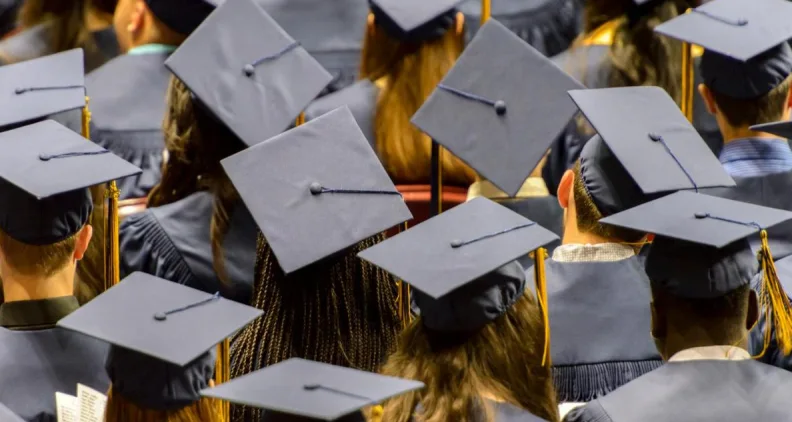
When AI meets the graduation stage
Last week at the University of Central Florida, Gloria Caulfield, an executive at Tavistock Development Company, told graduates that we are living through a time of "profound change" that can be both "exciting" and "daunting." When she called the rise of artificial intelligence "the next industrial revolution," students began booing. The disruption grew louder until Caulfield paused, laughed, and asked fellow speakers, "What happened?"
She tried to continue, noting that only a few years ago AI wasn't a factor in everyday life — but the crowd's reaction shifted to cheers and applause, interrupting her again.
Eric Schmidt's tense reception
Former Google CEO Eric Schmidt faced a similar reception at the University of Arizona. In his case, the backlash began even before he spoke: student groups had protested his invitation because of a lawsuit alleging sexual assault (which he denies). According to local reports, boos started as he approached the stage.
When Schmidt said, "You will help shape artificial intelligence," the audience again voiced disapproval loudly enough that he tried to speak over it. He urged students to embrace AI tools, saying you should accept opportunities to work with AI rather than hesitate: "When someone offers you a seat on the rocket ship, you do not ask which seat, you just get on."
Not every speaker faced hostility
AI didn't provoke boos at every graduation. Nvidia CEO Jensen Huang spoke at Carnegie Mellon University and described AI as having "reinvented computing" without audible pushback. That contrast shows reactions vary by campus, speaker, and context.
Why students are expressing skepticism
Several factors explain the mood at some commencements:
- Economic anxiety: A recent Gallup poll found only 43% of Americans aged 15 to 34 say it's a good time to find a local job, down sharply from 75% in 2022. Graduates worry about employment prospects as technology changes industries.
- Perceptions of AI and capitalism: Journalist Brian Merchant argued many young people see AI as "the cruel new face of hyper-scaling capitalism," amplifying existing inequalities rather than creating broadly shared opportunity.
- Generational distrust: Some students resent corporate messaging from executives who represent industries they view as responsible for economic or social problems.
"I too would loudly boo at the prospect of this next industrial revolution if I was in my early twenties, unemployed, and had aspirations for my future greater than entering prompts into an LLM." — Brian Merchant
Resilience and the graduation message
Even when speakers avoided direct discussion of AI, "resilience" was a common theme. Schmidt acknowledged students' fears — that "the future has already been written," that jobs might disappear, that climate and politics are broken, and that graduates inherit problems they didn't create.
Some speakers may also have misread their audiences. Caulfield's remarks reportedly resonated poorly with arts and humanities graduates who felt disconnected from corporate examples. One student described the reaction as a collective "This sucks," rather than an organized protest.
Context and implications
These incidents reflect broader cultural tensions about AI's role in work, creativity, and society. Reactions at commencements are a visible, emotional snapshot of how many young people feel — uncertain about job prospects, skeptical of corporate narratives, and wary of rapid technological change.
For those covering the topic — from technology reporters to gaming news outlets and campus publications — the key is to capture both the facts and the underlying anxieties. Coverage should connect graduation-day reactions to labor statistics, industry hiring trends, and student perspectives on how AI may affect creative fields like game development and digital media.
What to watch next
- How universities respond: Will institutions adjust speaker selection or programming to better reflect student concerns?
- Workforce trends: Monitor hiring data, especially in tech, gaming news, and creative industries where automation could reshape roles.
- Student organizing: Expect more coordinated campus responses to commencement invitations tied to controversial figures or unpopular technologies.
Graduations will continue to be a stage for larger cultural conversations. As AI advances, expect more debates about opportunity, ethics, and who benefits from the next wave of technological change.
Author note
This article was adapted from reporting by Anthony Ha, TechCrunch's weekend editor. For outreach verification, Anthony can be reached at [email protected].
 TGLIST.COM.UA
Comments
No comments
Add Comment