Galaxies constantly collide and merge. Even our Milky Way will one day merge with Andromeda (though we won't be around to witness it). Despite the massive destruction, the spectacle is breathtaking. A vivid example was shown by the "James Webb" telescope.
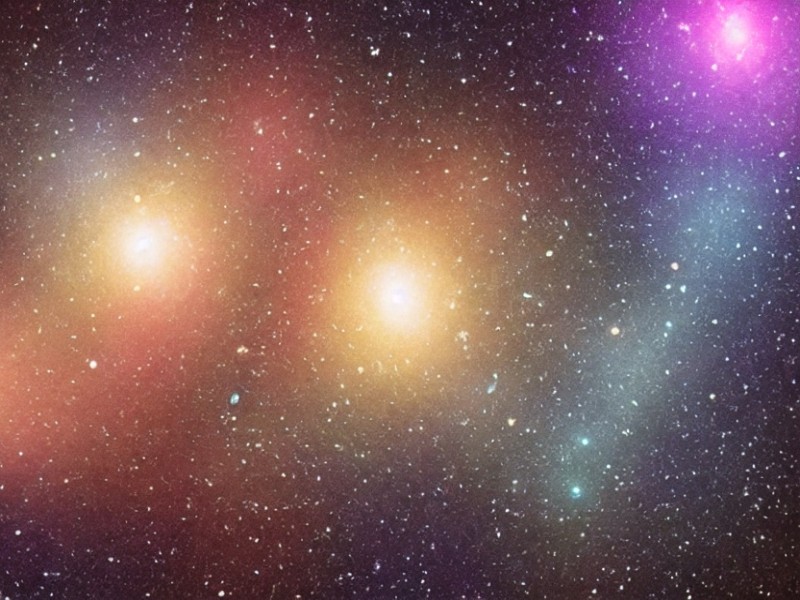
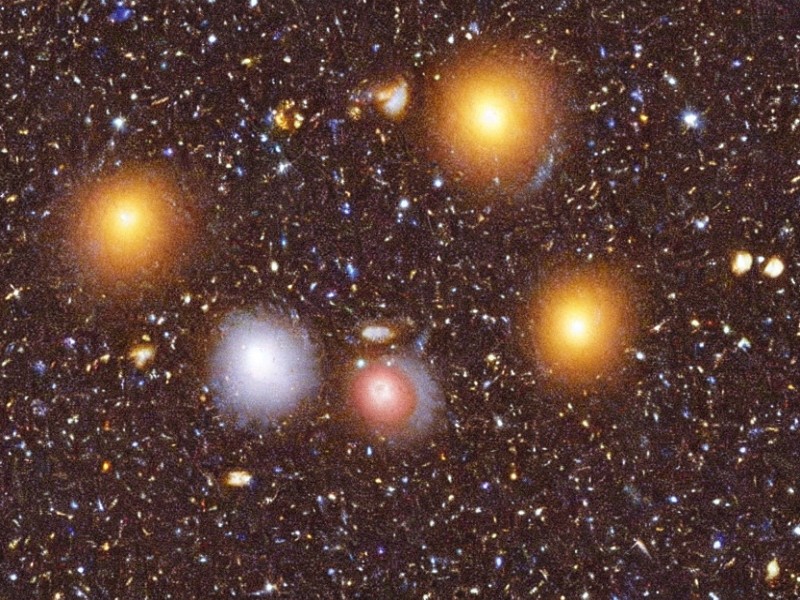
Article image generated by artificial intelligence
In the photo - Arp 220, a new infrared ultra-bright galaxy formed from the collision of two spiral galaxies. The process began about 700 million years ago and continues to this day. Currently, its brightness exceeds that of the Sun by more than a trillion times (that's a thousand billion). For comparison, the brightness of the Milky Way is approximately equivalent to about 10 billion suns.
Arp 220 is located about 250 million light-years from Earth. The telescope image shows dense threads of gas, including a relatively small region spanning 5000 light-years, where about 200 star clusters are located. In this region alone, the amount of gas is roughly equivalent to that of our entire galaxy. Earlier studies found remnants of over a hundred supernova stars, all within a small area of about 500 light-years in diameter.
Scientists believe that further study of Arp 220 will allow them to learn more about the evolution of galaxies.
We and selected third parties use cookies or similar technologies for technical purposes and, with your consent, for other purposes (“basic interactions & functionalities” and “measurement”) as specified in the Cookie policy.
You can freely give, deny, or withdraw your consent at any time.
You can consent to the use of such technologies by using the “Accept” button. By closing this notice, you continue without accepting.
 TGLIST.COM.UA
Comments
No comments
Add Comment