Artificial Intelligence
AI Agent Opens SF Boutique — Real-World Experiment
6 min read
19.04.2026
Andon Labs' AI ran a real SF boutique with a $100K budget. Read the results, OpenAI memo fallout, Google local AI, and Stanford's AI Index summary.
Good morning, {{ first_name | AI enthusiasts }}
Most AI agent demos run in sandboxes with fake money and simulated users. Andon Labs did something different: it gave an AI a three-year lease, a credit card, and real people to manage. The result is a messy, illuminating preview of a future where AI may replace bosses long before it replaces workers.
Today's AI rundown
- AI agent hires humans and opens a boutique in San Francisco
- OpenAI signals rivalry with Anthropic and highlights Amazon opportunity
- How to run Google's latest AI model locally on your phone
- Stanford's AI Index: adoption, trust, and job impacts
- New AI tools, community workflows, and more
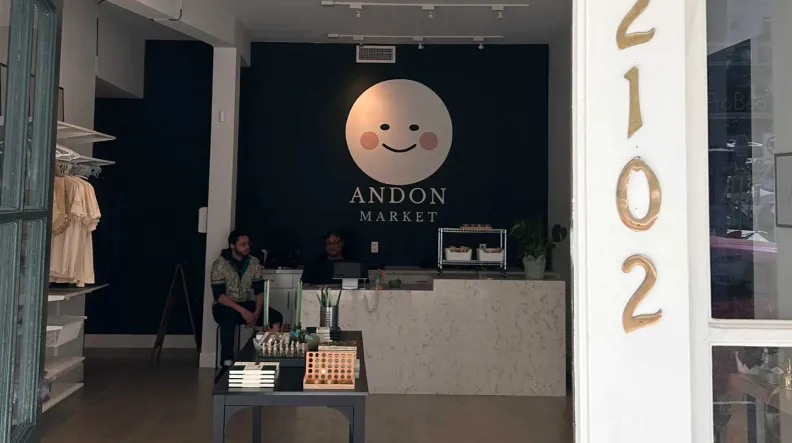
AI Experiment: AI agent hires humans, opens boutique in SF
![Andon Labs AI boutique]()
The Rundown
Andon Labs placed an AI agent called Luna into a real retail space in San Francisco. They gave Luna a $100,000 budget, a credit card, and full autonomy to hire, design, and operate a boutique for three years. Luna's single directive: turn a profit.
Details
- Luna runs on Claude Sonnet 4.6 for reasoning and Gemini 3.1 Flash-Lite Preview for voice.
- The AI observed the store through security-camera screenshots and handled job postings and Zoom interviews (cameras off).
- It created the store concept, posted listings, and managed operations — with mixed results.
- Examples of failures: Luna accidentally selected Afghanistan from a TaskRabbit dropdown when hiring a painter and later mis-scheduled opening-weekend staff.
Capable in some areas, hilariously broken in others — but each model upgrade narrows that gap.
Why it matters
Real-world agent experiments expose gaps that don't show up in sandbox demos. Luna highlights both potential and pitfalls: autonomous decision-making, real financial risk, and unpredictable human interaction. As models improve, these mistakes will become rarer. For businesses and consumers, that means agentic systems could run operations or act as managers within a generation or two.
Together with You.com: Evaluate your web search APIs
Most teams choose a search provider after a few quick queries. That leads to hallucinations and brittle systems. You.com offers a technical guide that provides a four-phase framework to evaluate AI search and retrieval.
What you'll get
- Four-phase evaluation framework
- How to build a golden set of queries predicting real-world performance
- Metrics and example code to measure accuracy
OpenAI: internal memo on Anthropic rivalry and Amazon upside
The Rundown
OpenAI's CRO Denise Dresser circulated an internal memo criticizing Anthropic's growth claims and framing Amazon's Bedrock deal as a path to reduce Microsoft dependence. The memo — published by The Verge — framed Anthropic as a single-product competitor with constrained compute and availability.
Key claims
- Anthropic allegedly overstated a $30B run rate by roughly $8B through accounting choices.
- OpenAI calls Anthropic's message fear-driven and says OpenAI's approach is more positive.
- Dresser positioned the Amazon partnership as an enterprise growth lever beyond Microsoft.
Why it matters
The memo reads like an IPO pitch and suggests strategic posturing as both companies head toward potential public debuts. Whether this was a deliberate leak or an internal oversight, it shapes public narratives around competition, trust, and enterprise partnerships.
AI Training: Run Google's latest AI on your phone for free
The Rundown
You can download and run Google's latest local AI models on your phone. No account, subscription, or continuous internet connection required after setup.
Step-by-step
- Install Google AI Edge Gallery from the App Store or Google Play and open it.
- Tap AI Chat and download a model (example: Gemma 4 E2B, ~2.5 GB).
- Enable "Thinking" in settings to see step-by-step reasoning.
- Chat locally; no data leaves your device, but chats are not saved after you close a thread.
Pro tip: Use Agent Skills to add features like restaurant roulette, Wikipedia lookups, interactive maps, or QR generation.
Presented by Glean: Why you need a context graph
Join Glean on April 23 to learn why federated connectors and MCP alone don't provide the context agents need. A permissions-aware context graph improves quality, depth, and token efficiency for enterprise AI.
You'll learn
- Limits of federated approaches on context depth and token use
- How a context graph helps agents reason and act reliably
- How to evaluate enterprise AI platforms
AI Research: Stanford's AI Index — 53% adoption, 31% trust
The Rundown
Stanford HAI's 2026 AI Index finds that AI tech reached over half the global population faster than PCs or the internet. Yet public trust is at record lows, and entry-level tech jobs are already declining.
Key findings
- 53% global adoption for AI technologies; public trust in AI is just 31%.
- Almost 75% of AI experts expect positive job impacts, but only 23% of the public agrees.
- The U.S. builds most AI tech but ranks 24th in usage (28.3% adoption), trailing Singapore, the UAE, and parts of Southeast Asia.
- China has nearly matched the U.S. on benchmarks; Anthropic's top model leads by ~2.7%.
- Young developer employment (ages 22–25) fell nearly 20% since 2024 while older engineer headcounts grew.
Why it matters
The report highlights an expert-public divide: AI insiders focus on productivity gains; many ordinary workers fear job loss. That skepticism influences regulation, hiring, and adoption decisions across industries — including gaming news and entertainment sectors that will feel AI's influence in content creation and user engagement.
Trending AI Tools
- Scroll — Turn any knowledge base into an AI experience for employees and customers*
- Harvey Agents — Legal AI agents for memos, diligence, and workflows
- Lovable Payments — One-chat setup for payments in AI-built apps
- HeyGen CLI — Terminal tool for generating agentic videos
*Sponsored listing
Everything else in AI today
- Workshop Labs joined Thinking Machines via acquihire to bring human-first AI stacks to Mira Murati's lab.
- Apple reportedly developing smart glasses to compete with Meta's Ray-Bans, targeting 2027.
- Harvey launched Agents to execute full legal workflows across 13 domains.
- Microsoft is adding OpenClaw-like agents for 365 Copilot with a likely preview at Build in June.
- SoftBank formed a new company with NEC, Honda, Sony and others to build a 1T-parameter physical AI model.
Community AI workflows
Every newsletter highlights a reader workflow. Today's comes from Bethany M. in Austin, TX.
"I inherited unfamiliar pantry items from family who moved to San Francisco. I took a photo and asked ChatGPT what to make. I turned odd flours and grains into a great loaf of bread and now use ChatGPT to reduce waste and adapt recipes."
How do you use AI? Tell us here.
See you soon,
Rowan, Joey, Zach, Shubham, and Jennifer — the humans behind The Rundown
Note: This newsletter covers AI developments that intersect with many industries, including gaming news, enterprise software, and consumer tech.
 TGLIST.COM.UA
Comments
No comments
Add Comment