Gaming
Pragmata Review: Great Combat, Safe Story
4 min read
19.04.2026
Pragmata delivers inventive combat and striking set pieces, but a safe, trope-heavy story holds it back. Read the full gaming news review.
Capcom's Pragmata: Ambitious Sci‑Fi Action with Great Combat, Weak Story
In recent years Capcom has reinforced its position by stewarding long-running franchises like Monster Hunter, Resident Evil, and Street Fighter. Riding that momentum, the developer launched a new property called Pragmata. The game mixes slow-paced, methodical action with a sci‑fi setting that explores lunar colonization, artificial intelligence, and 3D printing tech. It introduces interesting systems and striking set pieces, but the narrative relies heavily on familiar sci‑fi tropes and often plays it safe.
Premise and setting
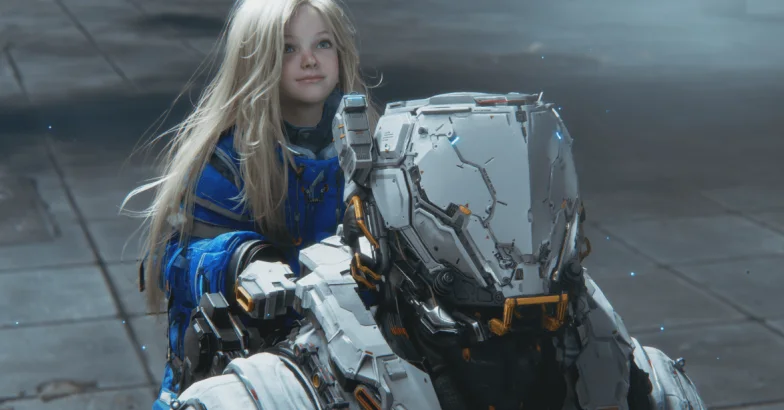
Pragmata opens with a small team investigating a disturbance at a lunar outpost. The colony is eerily empty. Hugh, one of the investigators, becomes separated from the others and pairs with Diana, an experimental android who appears to be a young girl. Their goal is straightforward: survive, understand what happened, and find a way back to Earth.
The antagonistic force is a rogue AI that now controls the colony and views humans with hostility. The game uses this setup to explore ideas like AI governance, corporate control in space, and a new element that enables near‑limitless 3D printing—concepts that could be highly relevant to today's technological anxieties.
Gameplay and combat
Despite clear Resident Evil DNA, Pragmata plays more like a traditional third‑person action game than a pure horror title. Hugh receives futuristic weapons—shotguns, missile launchers and more—plus tools and gadgets that let you customize playstyle. Materials and upgrades appear frequently, enabling weapon and suit improvements to suit stealth, range, or close‑quarters tactics.
- Customizable loadouts and numerous upgrade paths.
- Helpful gadgets such as holographic decoys for distraction and stealth.
- Generous checkpoint placement that reduces frustration and encourages exploration.
The standout mechanic is the cooperative dynamic between Hugh and Diana. Diana rides on Hugh's back and supports him during combat by hacking enemies. Hacking plays as a fast mini‑puzzle: move a cursor through a grid to reach an enemy's weak point while still dodging attacks and shooting. It creates a tense multitasking experience—part puzzle, part shooter—that feels unique and rewarding once you get the rhythm.
"The combat is easily the best part of Pragmata: inventive, challenging, and finely tuned."
Level design and standout moments
Some environments are genuinely imaginative. One memorable sequence sends players through a 3D‑printed version of New York, reinterpreted by an AI. The result feels like a hallucination: taxi cabs fused into pavement, upside‑down storefronts, and architecture that defies logic. These surreal areas communicate the game's themes in vivid, sometimes unsettling ways.
That said, these standout scenes are exceptions. Much of the gameplay loop reduces to restoring power stations, unlocking doors, and progressing through predictable objectives. Exploration can feel repetitive when the main mission structure revolves around the same tasks.
Story and narrative delivery
Pragmata introduces rich, topical concepts—corporate malfeasance, AI dependence, and the ethics of synthetic life. Unfortunately, the main narrative often leans on well‑worn tropes. The corporate antagonist recalls Alien's Weyland‑Yutani. The relationship between Hugh and Diana echoes classic tales of artificial beings seeking personhood. Even enemy design borrows familiar motifs, sometimes bordering on parody.
A bigger problem is how the game delivers its best narrative material. Many of the most interesting details appear only in optional collectibles, emails, or holographic logs. Players who don't dig through side content will miss the subtler commentary about automation, responsibility, and corporate indifference.
Where Pragmata succeeds and where it falls short
- Successes: Highly original combat mechanics, satisfying weapons, varied enemy design, and striking set pieces.
- Shortcomings: A story that leans on clichés, uneven pacing, and heavy reliance on optional reading to reveal deeper ideas.
There's a strong core here. Pragmata feels polished and often inspired, but it doesn't consistently push its themes or systems far enough to stand apart. That's not unusual for a new franchise: many games find their voice after one or two entries. Capcom has a history of iterating and improving series over time, so Pragmata may evolve into something more distinctive in future installments.
Release and platforms
Pragmata launched on Switch 2, PS5, Xbox Series X|S, and PC on April 17. For readers following gaming news, it's a title worth watching: the combat alone makes it notable, and the worldbuilding hints at greater potential.
Overall: Pragmata delivers inventive combat and memorable visual moments, but its narrative and mission structure keep it from fully realizing its promise. With stronger storytelling and bolder design choices in a sequel, it could become a standout Capcom franchise.
By Andrew Webster
 TGLIST.COM.UA
Comments
No comments
Add Comment