Artificial Intelligence
AI Shift: Perplexity Becomes a Personal Finance Hub
5 min read
12.04.2026
Perplexity integrates Plaid to become a finance hub, Amazon reveals AI revenue, Oxford AI predicts heart failure years early. Plus automation tips and gaming news.
Morning Brief: AI shifts, finance hubs, and medical breakthroughs
Good morning, {{ first_name | AI enthusiasts }}. Today's roundup covers major AI moves that reshape search, finance, enterprise infrastructure, and healthcare. We also highlight practical automation tips and a reader workflow. Gaming news is evolving alongside these trends, influencing AI-driven personalization and monetization strategies across apps and platforms.
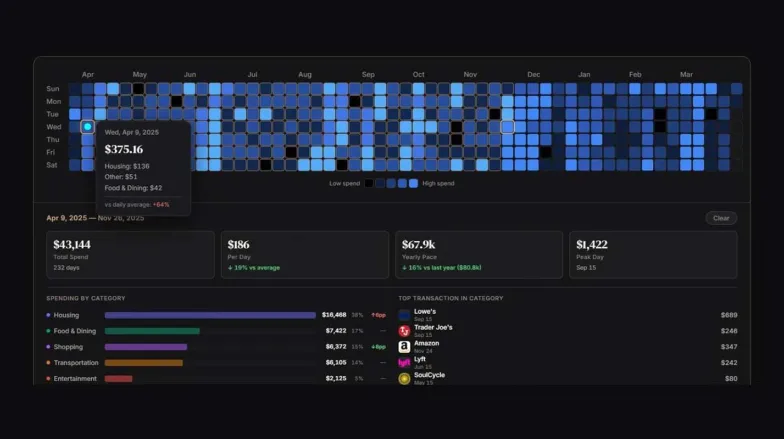
Perplexity turns search into a personal finance platform
What happened
Perplexity launched a Plaid integration for its Computer agent, letting users connect checking accounts, credit cards, loans, and brokerage data in a read-only view. The agent can now build budgets, net-worth trackers, debt payoff plans, and retirement dashboards from simple text prompts.
Details
- Plaid's 12,000+ bank network feeds into Perplexity Computer.
- Users permit read-only access to financial accounts to power personalized dashboards and tax helpers.
- The platform already added U.S. tax integrations that autonomously fill IRS forms and review professionally prepared returns.
- Perplexity's agentic pivot pushed its ARR past $450M in March — a 50% one-month jump.
Perplexity is moving beyond search. Its Computer agent now competes with Mint, TurboTax, and other personal finance apps.
Why this matters
Perplexity began by challenging Google on search. By integrating bank and tax data, it becomes a central finance hub. That changes its competitive set from search engines to personal finance and tax tools and opens new monetization paths.
Sponsored: SerpApi — live search data via API
Need reliable, real-time web data without scraper headaches? SerpApi returns structured search results ready for AI apps, product research, price tracking, and SEO insights. Features include:
- Real-time results from multiple search engines.
- ZeroTrace Mode for confidential queries.
- Legal protections for scraping use cases in the U.S.
Amazon: Jassy publishes AI revenue and chip numbers
What Jassy disclosed
- AWS AI revenue crossed $15B in annualized revenue.
- Amazon's custom chips (Trainium, Graviton, Nitro) generated over $20B yearly.
- Amazon plans $200B in AI-related capital expenditure and may sell racks of its chips to third parties.
- Two unnamed customers sought to buy Amazon's entire Graviton supply for 2026; Amazon declined to preserve capacity for others.
Why it matters
Model counts don't tell the full story. Amazon's chip and infrastructure revenue shows real supply-side competition to Nvidia. That changes dynamics for enterprise compute, cloud pricing, and where AI workloads run.
How to automate recurring work: Notion Custom Agents
Overview
Notion Custom Agents can automate scheduled tasks like inbound lead handling, accounting workflows, campaign updates, and recurring admin work. They reduce manual effort and keep run histories in one place.
Step-by-step
- Create two Notion databases: Tasks (Name, Source, Priority, Status, Assigned To) and Reports (to log agent runs).
- Open Notion AI, click "+Create custom agent", and enter a prompt such as: "Create a Weekly Planner agent that reads my last 7 days of emails every Monday morning, adds action items to the Tasks database, and writes a one-paragraph summary into Reports."
- Review the drafted agent, connect Gmail, confirm the schedule, and save.
- Test, refine instructions, and run on schedule. Clone the pattern for other recurring jobs.
Pro tip: Use the same two databases for multiple agents. Each agent creates a traceable run history in Reports.
Enterprise AI ROI: 2026 benchmarks (sponsored by Unframe)
Unframe surveyed 255 enterprise leaders and found:
- 4 in 5 enterprises report productivity gains from AI.
- ROI drops 25% in environments using six or more tools.
- Half of potential value is lost between insight and action.
Oxford AI detects heart failure years earlier
Research summary
University of Oxford researchers created an AI that reads subtle texture changes in fat around the heart on routine CT scans. The model flagged patients at high risk of heart failure up to five years in advance with 86% accuracy, tested across 72,000 patients.
Impact
- High-risk patients had a 1-in-4 chance of heart failure within five years, a 20x increase versus those flagged low-risk.
- Oxford is working with regulators to deploy the tool across NHS hospitals and plans broader rollout to all chest CT scans.
An 86%-accurate early warning on scans already being done could shift care from reactive treatment to prevention.
Trending AI tools and updates
- Claude Cowork — Anthropic's desktop agent, now generally available.
- Muse Spark — Meta's multimodal reasoning AI with multi-agent support.
- Meow — Infrastructure enabling agents to open bank accounts, issue cards, and more.
- Spacelift Intelligence — AI infra suite for faster platform delivery.
- OpenAI reportedly built an advanced cybersecurity model similar to Anthropic's Mythos and plans limited partner releases.
- xAI reshuffles engineering leadership ahead of an IPO; CFO departure announced.
- OpenAI launched a $100/month Pro tier aimed at heavy agentic coding users.
- Florida's attorney general opened a probe into OAI over alleged misuse of ChatGPT in planning a campus shooting.
Community workflow spotlight
From reader A.M. in New Zealand: They used ChatGPT to prepare for a senior role interview. Method:
- Loaded the job description and practiced interview questions by voice.
- Iterated on answers with feedback until scoring highly.
- Researched board members and tailored responses to each person's role and interests.
Result: Advanced to second-round board interviews. A practical example of AI helping with real-world career outcomes.
Closing
That's it for today. From finance agents and enterprise chip wars to early medical detection, AI is expanding into daily life and industries alike. Gaming news continues to intersect with these trends, especially around personalization, AI-driven matchmaking, and monetization models.
See you soon, Rowan, Joey, Zach, Shubham, and Jennifer — the humans behind The Rundown
 TGLIST.COM.UA
Comments
No comments
Add Comment