Tech
OpenAI Signs DoD AI Deal With Safety Limits
4 min read
01.03.2026
OpenAI struck a DoD deal to run models on classified networks with safeguards against mass surveillance and autonomous weapons.
OpenAI reaches deal to let U.S. Department of Defense use its AI models
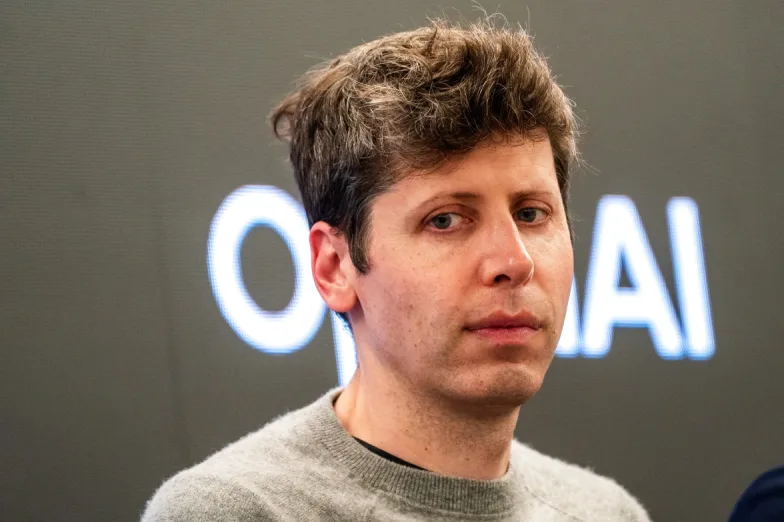
OpenAI CEO Sam Altman announced late Friday that the company has reached an agreement allowing the U.S. Department of Defense (DoD) to use OpenAI's AI models on the department's classified network. The move ends a standoff between the Pentagon and several AI companies over acceptable military uses of advanced models.
Background: dispute with Anthropic and government pressure
The agreement comes after a high-profile negotiation between the Pentagon and Anthropic, an OpenAI competitor. The DoD had pushed AI firms to permit their technology for "all lawful purposes," while Anthropic tried to draw firm limits — especially around domestic mass surveillance and fully autonomous weapons systems.
Anthropic CEO Dario Amodei said in a statement that the company "never raised objections to particular military operations nor attempted to limit use of our technology in an ad hoc manner," but warned that "in a narrow set of cases, we believe AI can undermine, rather than defend, democratic values."
Employee pushback and political fallout
- More than 60 OpenAI employees and roughly 300 Google employees signed an open letter supporting Anthropic's concerns.
- After talks between Anthropic and the Pentagon failed, President Donald Trump publicly criticized Anthropic and directed federal agencies to stop using its products after a six-month phase-out.
- Secretary of Defense Pete Hegseth accused Anthropic of attempting to "seize veto power over the operational decisions of the United States military" and announced a supply-chain restriction on work with Anthropic.
Anthropic responded that it had not received direct communication from the Pentagon or White House about the negotiations and said it would "challenge any supply chain risk designation in court."
What OpenAI says is different in its deal
"Two of our most important safety principles are prohibitions on domestic mass surveillance and human responsibility for the use of force," Sam Altman wrote on X.
Altman said OpenAI negotiated protections addressing the same issues that became contentious in the Anthropic talks. Key points OpenAI highlighted include:
- Prohibitions on domestic mass surveillance.
- Commitments to human responsibility for the use of force, including restrictions on autonomous weapon systems.
- Technical safeguards designed to ensure models behave as intended.
- Deployment of OpenAI engineers alongside Pentagon teams to help integrate and verify safety measures.
Altman said OpenAI asked the DoD to offer the same contract terms to all AI companies. He framed the agreement as an effort to move away from legal and political escalation toward practical, reasonable arrangements.
Operational and safety implications
Fortune reports Altman told OpenAI staff the government will allow the company to build its own "safety stack" to prevent misuse. He added that if a model refuses to carry out a task for safety reasons, the government would not force OpenAI to override that refusal.
The deal highlights growing demand for clear guardrails as governments adopt AI tools. Expect these themes to shape future procurement: transparency, technical controls, auditability, and limits on potentially hazardous uses.
Broader context and timing
The announcement came as international tensions rose: news also broke that the U.S. and Israeli governments had begun bombing Iran, and President Trump publicly called for regime change in Iran. Those developments underscore the sensitive context in which AI and defense discussions are unfolding.
What this means for the industry (and gaming news audiences)
While this deal directly affects defense contracting, it also matters to broader AI users — including the gaming industry. Game developers, platform providers, and gaming news outlets should watch how safety stacks, model restrictions, and deployment oversight evolve. Similar safeguards and policies could influence how large language models and generative AI are integrated into gaming tools, content moderation, and in-game systems.
Summary
- OpenAI reached an agreement with the DoD to use its models on classified networks.
- The deal reportedly includes explicit prohibitions on domestic mass surveillance and protections against autonomous use of force.
- Anthropic disputed negotiations with the Pentagon and may legally challenge supply-chain restrictions.
- Industry observers, including those covering gaming news, should monitor how these safety practices spread to commercial AI uses.
Reporter: Anthony Ha, TechCrunch weekend editor. Contact: [email protected].
 TGLIST.COM.UA
Comments
No comments
Add Comment