Tech
Waymo's $16B Push and the Future of Autonomous Mobility
5 min read
15.02.2026
Waymo raised $16B to expand robotaxis. We examine the strengths, risks, and broader AV funding trends shaping mobility and related sectors.
Welcome back to TechCrunch Mobility
Your central hub for news and insights on the future of transportation. To get this in your inbox, sign up here for free — just click TechCrunch Mobility!
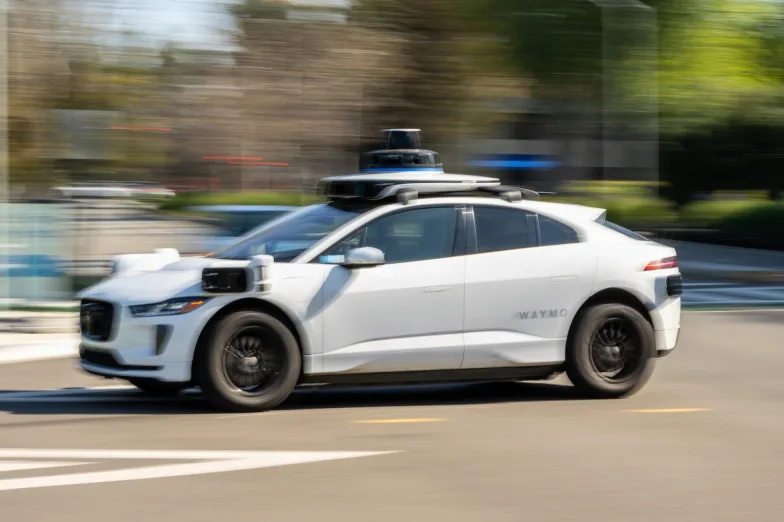
Waymo's $16B Boost: Enough to Win?
Waymo's acceleration over the past 18 months is undeniable. The Alphabet-owned self-driving company now runs commercial robotaxi services in six U.S. markets — the San Francisco Bay Area, Phoenix, Los Angeles, Austin, Atlanta and Miami — and it plans to expand to more than a dozen cities internationally this year, including London and Tokyo.
Now it has $16 billion to fuel that expansion. Is it enough? Industry watchers' answers mostly fall into "sort of" and "it depends."
The bull case
- Strong parent backing: Alphabet remains Waymo's largest investor and primary backer. That stability separates Waymo from many AV startups that faltered when investor priorities shifted.
- Rising usage: Ridership and autonomous miles driven are growing quickly. Waymo provides roughly 400,000 rides per week across six U.S. metro areas. In 2025 the company more than tripled annual volume to about 15 million rides, signaling strong demand.
The challenges
- Profitability pressure: High capital and operating costs still stand between Waymo and a clear path to profit.
- Regulatory scrutiny: Increased attention from regulators could slow deployment or impose costly requirements. (Waymo's chief safety officer recently testified at a Senate Commerce hearing.)
- Business model choice: If Waymo shifts to licensing its AV technology rather than operating fleets, it may gain distribution but lose operational control — a tough trade-off while the technology and rules are still evolving.
- Manufacturing scale: Unlike Tesla, Waymo lacks in-house vehicle manufacturing. While automotive partners help, they don't provide the same cost leverage from large-scale manufacturing and vertical integration.
Waymo has the capital and momentum, but success hinges on cost reduction, regulatory outcomes, and strategic choices about operations versus licensing.
If you disagree, email your argument to [email protected].
A little bird: Canoo, Epstein and hidden investors
The investors behind the now-defunct EV startup Canoo were long mysterious and only surfaced through litigation. Six years ago I received a tip about one investor: David Stern. He seemed like a ghost with high-profile connections. As DOJ files on Jeffrey Epstein emerged, it became clear Stern was a close business partner of Epstein. Stern introduced Epstein to investment opportunities in mobility — pitching Faraday Future, Lucid Motors and Canoo during the boom years.
Read Sean O'Kane's deeper reporting on Stern and Epstein's ties and how mobility startups intersected with powerful, often opaque, backers.
Got a tip? Email Kirsten Korosec at [email protected] or Signal at kkorosec.07, or email Sean O'Kane at [email protected].
Deals: funding flows into applied autonomy
Autonomous vehicle technology is more than robotaxis. It's expensive and technically demanding, so only well-capitalized companies such as Tesla, Waymo and Zoox have pursued full-scale consumer robotaxis. Many startups instead apply AV systems to industrial and niche markets: trucking, defense, mining, construction, forklifts and more. Investors don't want to miss out and are financing those pivots.
Bedrock Robotics
Silicon Valley's Bedrock Robotics — founded by veterans from Waymo and Segment — develops self-driving systems that retrofit construction equipment. The company raised $270 million in Series B funding co-led by CapitalG and Valor Atreides AI Fund, bringing total capital raised to more than $350 million since its 2024 founding. Investors include Nvidia's NVentures, 8VC, Tishman Speyer, MIT, and others.
Bedrock is also hiring top talent: Vincent Gonguet (formerly led AI safety and alignment at Meta for Llama models) joined as head of evaluation, and John Chu left Waymo to join Bedrock. Expect more startups focused on practical, physical-AI applications to attract both funding and talent.
Other notable rounds
- Additive Drives (Germany): €25 million from Nordic Alpha Partners for electric motor technology.
- Apeiron Labs: $9.5 million Series A for autonomous underwater vehicles led by Dyne Ventures and others.
- GoCab (Africa): $45 million financing ($15M equity, $30M debt) led by E3 Capital and Janngo Capital.
- Mitra EV (Los Angeles): $27 million in financing including equity and a credit facility.
- Overland AI: $100 million to develop self-driving systems for military applications, led by 8VC.
- Plug: $20 million Series A for the used EV marketplace led by Lightspeed.
- R3 Robotics (Europe): €20 million to scale automated EV disassembly via a mix of grants and venture funding.
- Skyryse (aviation automation): Raised over $300 million in Series C, valuing the startup at $1.15 billion.
Notable reads and industry tidbits
- China bans hidden electronic door handles: The Ministry of Industry and Information Technology ruled that new cars sold in China must have mechanical releases on door handles by Jan 1, 2027. There's chatter Europe may follow. This will affect EV and automotive UX design globally.
- Uber and AV strategy: Uber promoted Balaji Krishnamurthy to CFO. He has ties to AV partnerships and a board seat at Waabi, signaling Uber will continue investing in autonomous ride-hailing through equity stakes, offtake deals and infrastructure support.
- Uber lawsuit verdict: A jury found Uber liable as an apparent agent and awarded $8.5 million to a plaintiff alleging assault by an Uber driver. The jury rejected negligence and design-defect claims and denied punitive damages; Uber plans to appeal.
One more thing: newsletter poll on Elon Musk's company name
We polled readers on the name or ticker for Elon Musk's combined supercompany. Many suggestions had space themes. The poll winner was plain "X" (about 50%), followed by ELON (20.7%), SpaceAI (17.2%) and K2 (12.1%). The editor's pick is X as well — the likely umbrella for more than SpaceX and xAI.
To participate in future polls and get these stories, sign up for our newsletter.
Why this matters (and a note for gamers)
Autonomy investments shape more than transport: they influence logistics, defense, construction and even gaming news where simulated environments, AI agents and vehicle dynamics research cross over into game development. Expect to see breakthroughs transfer between real-world AV systems and virtual simulations used in training and entertainment.
Image Credits: Bryce Durbin
 TGLIST.COM.UA
Comments
No comments
Add Comment