Tech
Can cheaper fusion beat the cost barrier?
5 min read
08.02.2026
Pacific Fusion's Sandia tests show a path to cut costly lasers from pulsed ICF, improving the economics of fusion power.
Can fusion power be affordable?
Fusion holds the promise of abundant, round-the-clock electricity delivered in ways the grid already understands. But one big question remains: can companies start fusion reactions without spending more to ignite them than they can recoup by selling the power?
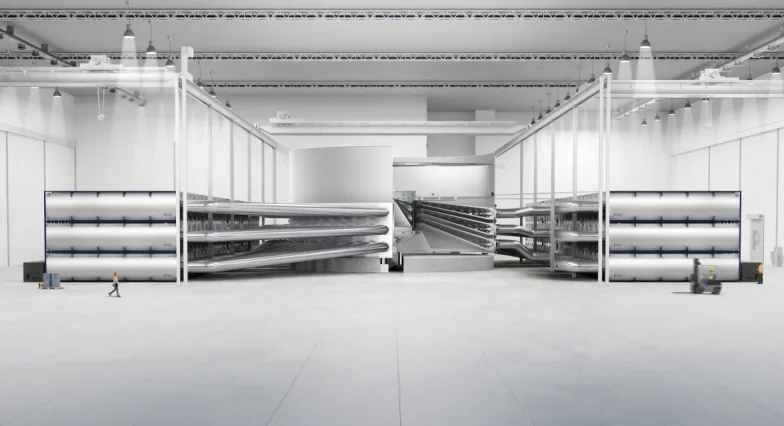
Many teams have ideas, but no one has definitively solved the economics yet. Commonwealth Fusion Systems, for example, is building a very large reactor for several hundred million dollars, but it won't be turned on until next year. That leaves the cost question open for now.
Smaller, cheaper designs: Pacific Fusion's approach
Newer startups aim to cut costs. Pacific Fusion recently announced experimental results from Sandia National Laboratories that it says will let the company drop some costly components from its design. The company shared the results exclusively with TechCrunch.
Pacific Fusion pursues pulsed-driven inertial confinement fusion (ICF), a method related to experiments at the National Ignition Facility (NIF). The basic idea: compress many small fuel pellets in rapid succession so that atoms inside each pellet fuse and release energy.
Lasers vs. electrical pulses
NIF uses powerful lasers to compress its targets. Pacific Fusion wants to replace—or at least reduce—those lasers by firing massive electrical pulses. The pulses create a magnetic field around a fuel pellet (about the size of a pencil eraser) that implodes the pellet in under 100 billionths of a second. Faster implosions heat the fuel more, improving the chance of fusion, says Keith LeChien, Pacific Fusion's co-founder and CTO.
"The faster you can implode it, the hotter it'll get." — Keith LeChien, Pacific Fusion
Removing the expensive kickstart
One challenge with pulser-driven ICF has been the need for a small preheat—often supplied by lasers or auxiliary magnets—to get the pellet into the right state before the main compression. That preheat usually accounts for roughly 5%–10% of the required energy. But adding lasers and separate magnetic systems increases complexity, maintenance, and capital cost.
At Sandia, Pacific Fusion adjusted the design of the thin cylinder that holds the fuel pellet and changed the timing and shape of the electrical current feeding the device. These tweaks let a bit of the magnetic field penetrate the target before the main compression, preheating the pellet without a separate laser or magnet system.
How the tweak works
- Targets are plastic pellets wrapped in aluminum.
- Varying the aluminum thickness controls how much magnetic field seeps into the fuel.
- The casing must be made with moderate precision—comparable to manufacturing a .22 caliber bullet casing—using well-established industrial processes.
LeChien says the leaked magnetic preheat uses a tiny fraction of the system's energy—well under 1%—so it doesn't materially change energy requirements per shot. That means the main energy budget stays focused on the implosion pulses themselves.
Cost implications
Eliminating the separate magnetic system would simplify engineering and reduce maintenance, giving a modest cost improvement. But removing lasers has much larger financial implications: the kind of laser capacity needed to preheat high-gain targets can top $100 million.
Dropping the laser reduces both capital and operating expenses. That could move pulsed ICF closer to the price point required to sell electricity competitively—if the approach scales and the devices achieve the expected yields.
From simulation to real-world testing
Experiments like the Sandia tests also help validate and refine simulation models. Many groups rely on simulations to predict performance, but building and testing hardware is a different challenge. Closing the loop—simulate, build, test, and match results—matters for investors and for predicting commercial viability.
"A lot of people have simulated things and said, 'Oh, this will work or that will work.' It's a very different game to simulate something, build it, test it, and have it work." — Keith LeChien
Where fusion startups are aiming
Most fusion startups target the early to mid-2030s for first commercial power plants. If designs can avoid expensive subsystems like large lasers while still delivering sufficient energy gain and reliability, they stand a better chance of competing with conventional power on cost. But significant engineering, testing, and scaling hurdles remain.
Why this matters beyond energy
Affordable fusion could transform energy systems, lower carbon emissions, and reduce reliance on intermittent renewable sources by providing firm, dispatchable power. Tech news audiences, and even those who follow gaming news for hardware and systems updates, often track these advances because breakthroughs in energy and materials can ripple into computing, data centers, and electronics.
Key takeaways
- Pacific Fusion's Sandia experiments show that modest manufacturing tweaks can preheat fuel without expensive lasers.
- The approach may reduce capital and maintenance costs, improving the economics of pulsed ICF.
- Real-world testing that matches simulations is essential to prove commercial viability.
- Even promising cost reductions won't guarantee success; scaling, yield, and reliability will determine whether fusion can compete on price by the 2030s.
About the reporting
This story was reported by Tim De Chant, senior climate reporter at TechCrunch. He has written for Wired, the Chicago Tribune, Ars Technica, and more, and teaches in MIT's Graduate Program in Science Writing.
 TGLIST.COM.UA
Comments
No comments
Add Comment