Artificial Intelligence
Anthropic's Super Bowl Ad and the Latest AI Developments
5 min read
08.02.2026
Anthropic's ad-free pledge vs OpenAI, Kling 3.0 video, Codex coding teams, PaperBanana diagrams, and more AI and gaming news.
Anthropic vs. OpenAI: Super Bowl Ad Puts AI Ads in the Spotlight
Good morning, {{ first_name | AI enthusiasts }}. The Claude vs. ChatGPT rivalry just went mainstream. Anthropic launched a Super Bowl campaign that directly attacks OpenAI's decision to add ads to ChatGPT, while promising to keep Claude ad-free.
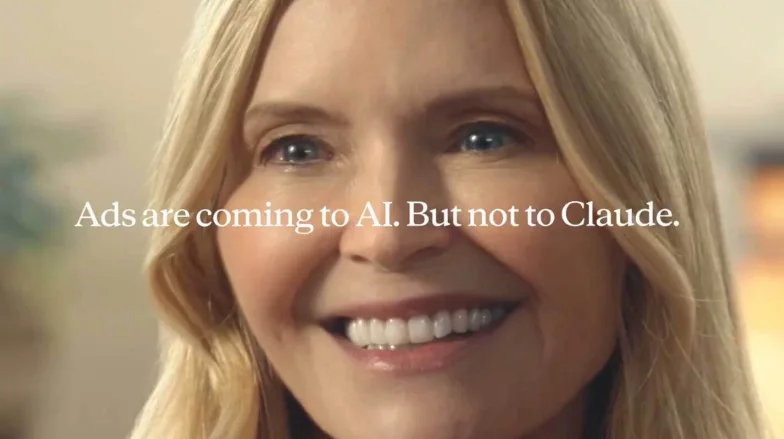
"Ads are coming to AI. But not to Claude."
The campaign pairs bold creative spots with a public pledge: Anthropic says advertising would be "incompatible" with Claude acting in users' interests. The ads parody interruptions during helpful AI conversations to make the point.
Key details
- Anthropic published a blog post committing to keep Claude ad-free.
- The Super Bowl spots visualize ads interrupting AI chats and contrast that with Claude's pledge.
- OpenAI's CMO Kate Rouch argued on X that ad-supported free access to ChatGPT benefits far more people than Anthropic's paid tiers.
- Sam Altman called Anthropic's campaign "clearly dishonest," adding that OpenAI would not run intrusive ads and characterizing Claude as a premium product.
Why it matters: Anthropic draws a clear line on AI business models—privacy- and user-focused vs. ad-supported scale. OpenAI counters that ad revenue enables broader access. Both positions affect how millions of users will experience AI assistants, and this debate shapes trust, monetization, and product strategy across the industry and gaming news tied to interactive AI features.
Kling 3.0: Longer, More Consistent AI Video
Chinese startup Kling released Kling 3.0, a unified multimodal model that combines text-to-video, image-to-video, and native audio. It focuses on longer clips and improved visual consistency.
What's new
- Unified system supports 15-second clips and a Multi-Shot mode that auto-generates camera angles.
- New "anchor" references let the model lock character and scene traits across shots.
- Native audio generation includes voice cloning for multiple characters and expanded multilingual dialogue.
- Release is rolling out first to Ultra-tier subscribers with broader availability expected soon.
Why it matters: Kling continues closing the gap between experimental demos and production-ready video workflows. Storyboarding, audio, and consistent character modeling are key for creators, game trailers, and other content that blurs the line between gaming news clips and cinematic marketing.
AI Training: Build a Coordinated Coding Team with the Codex App
Use OpenAI's Codex app to run a parallelized "coding factory." Multiple agents can build different pages of a site simultaneously, speeding delivery and keeping merges organized.
Step-by-step guide
- Scaffold a React site with
npm create vite@latest and open it in Codex.
- Create a git repository inside Codex and draft a modular PRD that defines each page's scope.
- Open a separate thread for each page (landing, blog, pricing) and assign an agent to each thread.
- Have agents follow the PRD, review outputs, and merge completed branches into the main agent.
- Use Codex's preview and the "Automations" menu to run daily code reviews, feature builds, and automated bug hunts.
Pro tip: Keep responsibilities narrow for each agent to avoid merge conflicts and speed review cycles.
Research Tool: PaperBanana Generates Publication-Ready Diagrams
Researchers from Peking University and Google Cloud AI created PaperBanana: a chain of five AI agents that automatically produce publication-quality diagrams for academic papers.
How it works
- Five agents cover retrieval, planning, styling, rendering, and critique.
- On a benchmark of 292 NeurIPS methodology diagrams, PaperBanana improved conciseness by 37% and readability by nearly 13% over baselines.
- The system can also polish human-drawn figures and wins aesthetic comparisons about 56% of the time.
Why it matters: Automating illustration and formatting cuts a major bottleneck in academic publishing. Tools like PaperBanana let researchers focus on ideas instead of production details.
Other AI Headlines
- Amazon rolled out Alexa+ across the U.S., free for Prime members or $19.99/month otherwise.
- Mistral launched Voxtral Transcribe 2 for transcription across 13 languages, plus an open-weights Realtime model.
- Perplexity released an advanced Deep Research feature with claimed SOTA benchmark performance for Max subscribers.
- ElevenLabs raised $500M, valuing the company at $11B; Cerebras secured $1B at a $23B valuation after a deal with OpenAI.
- Google says the Gemini app has 750M+ monthly active users and plans to increase investments to $185B in 2026.
Community Workflow Spotlight
Each newsletter highlights a reader workflow that uses AI to simplify life. Today's submission comes from Allen E. in Prattville, AL.
Allen tracks blood test trends related to leukemia. After each lab visit he speaks the new date and values into a system that adds data to an ongoing chart. Normal ranges appear as shaded areas so he can quickly see whether values are within target. This simple workflow saves time and improves clarity for long-term monitoring.
Why This Matters
The industry debate over ads in AI, advances in multimodal video, tools for collaborative coding, and research automation all point to one theme: AI is becoming more integrated into everyday creative, technical, and research workflows. From gaming news that ties interactive AI features into player experiences to academic publishing shortcuts, these developments change who can access high-quality tools and how they use them.
See you soon,
Rowan, Joey, Zach, Shubham, and Jennifer — the humans behind The Rundown
 TGLIST.COM.UA
Comments
No comments
Add Comment