Tech
Tesla's Shift: Robots, CapEx and EV Realities
5 min read
08.02.2026
Tesla leans into robots, AI and heavy 2026 CapEx while EVs remain its main revenue source. Key deals, Waymo fundraising whispers and industry updates.
Tesla's pivot: EVs still pay the bills
Welcome back to TechCrunch Mobility — your hub for news and insights on the future of transportation. To get this in your inbox, sign up here for free.
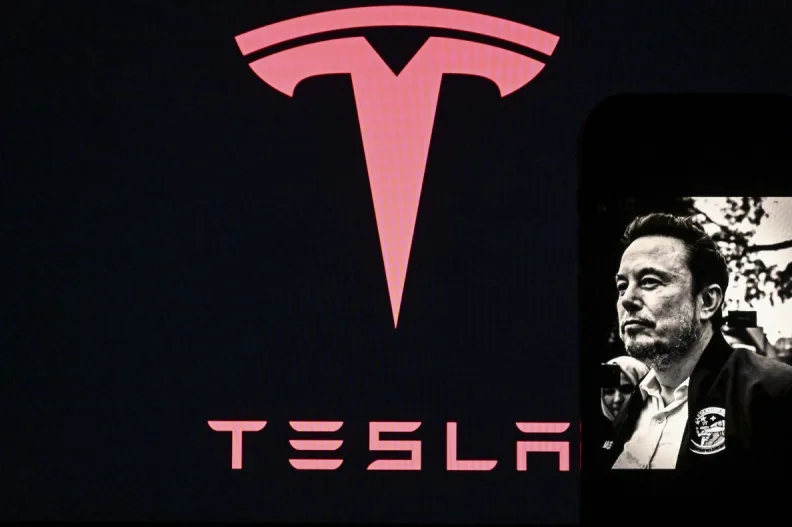
Elon Musk has long positioned Tesla as more than an electric-vehicle maker. Since the 2016 SolarCity acquisition, Tesla was framed as a sustainable energy company. More recently Musk has pushed the company as an AI and robotics leader. But financial reality tells a clearer story: most revenue still comes from cars.
In 2025 Tesla generated $94.8 billion in revenue. About $69.5 billion — roughly three-quarters — came from selling and leasing EVs and related regulatory credits. The remaining $25 billion split almost evenly between energy generation and storage (solar) and "services and other" (Superchargers, parts, Full Self-Driving subscriptions). As EV deliveries fell, Tesla's top line and profits suffered; 2025 profits were down 46% year‑over‑year.
CapEx, robots and a new factory talk
Tesla is trying to grow non-EV businesses to offset weaker vehicle sales. The company signaled a shift in its latest earnings: talk of AI and robotics is moving toward large capital commitments. Musk said 2026 will be a heavy CapEx year — more than doubling spending to about $20 billion — which will push cash flow negative in the near term.
Highlights from the earnings call and announcements:
- Tesla will end production of the Model S and Model X. Symbolically notable — these models changed the auto industry since the Model S launched in 2012 — but they account for only about 2% of Tesla's sales volume.
- Tesla intends to repurpose Fremont factory capacity to produce Optimus humanoid robots and scale robotaxi operations into more cities in 2026.
- Musk floated building a "TerraFab" factory to secure chip supply — a vertical move to protect production from global shortages.
- Tesla plans to invest $2 billion into Musk's AI startup xAI and align the two companies more closely. Reports also suggest talks about deeper combinations among SpaceX, Tesla and xAI.
For now, Tesla's shift toward robotics and AI involves heavy spending rather than immediate revenue gains.
Where Tesla currently stands
Deliveries drive Tesla's balance sheet. With EV sales down, the company is leaning on smaller but growing energy storage gains and nascent robotics and AI ambitions. How quickly those newer businesses can scale to meaningful revenue remains uncertain.
Corporate moves and fundraising whispers
A little bird tells us there's fundraising activity at Waymo. Reports last month said Waymo could raise up to $15 billion, largely from parent Alphabet, with strong interest from external investors and potential participation from an OEM.
Stay tuned for more reporting.
Deals — who raised what and why it matters
Deal activity shows investors still bet on autonomy and battery supply chains.
Deal of the week: Waabi
Waabi raised $750 million in a Series C led by Khosla Ventures and G2 Venture Partners, plus $250 million in milestone capital from Uber. The funds support deploying 25,000+ Waabi Driver-powered robotaxis exclusively on Uber's platform. Waabi began with a truck-focused stack but is now scaling a single technology across multiple self-driving verticals.
Other notable deals
- Gatik AI signed a major five-year, $600 million contract with a large consumer-goods company for driverless middle‑mile hauling. Gatik reports 60,000 fully driverless orders completed safely since mid‑2025.
- Luminar sold its lidar business for $33 million to MicroVision after a competitive auction. MicroVision plans to integrate the assets into its sensor roadmap.
- Rad Power Bikes, which entered bankruptcy recently, agreed to sell to Life Electric Vehicles Holdings for about $13.2 million (roughly $14.9 million including liabilities). The company once raised $329.2 million and peaked at a $1.65 billion valuation.
- Redwood Materials raised $425 million in a Series E led by Eclipse, with Google, NVentures (Nvidia), Capricorn and Goldman Sachs participating.
Notable reads and industry tidbits
- Obi published data on ride-hailing and robotaxis in the San Francisco Bay Area. One takeaway: the price gap between Waymo and Uber/Lyft is narrowing.
- Uber launched "Uber AV Labs," a data-sharing division. This is positioned as a partnership play — sensor-equipped Uber cars will collect data to share with partners such as Lucid, Waymo and Waabi. No contracts are signed yet.
- Waymo received approval to serve San Francisco International Airport (SFO) and will roll access out to select riders, then all customers. The company is under investigation by NHTSA and NTSB after reporting a robotaxi struck a child near a Santa Monica elementary school on Jan. 23.
- The San Francisco Police Department is investigating an incident involving a Zoox vehicle that crashed into the driver-side door of a parked car.
Why this matters
The mobility industry is at a crossroads: traditional EV sales still fund operations, but companies are investing heavily in autonomy, AI, robotics and supply chain resilience. These bets could reshape future revenue streams — but they require time and significant capital.
Got a tip?
Email Kirsten Korosec at [email protected] or message her on Signal at kkorosec.07. You can also email Sean O'Kane at [email protected].
One more thing (a fun poll)
What will the name or ticker be if Musk combines his companies into a "supercompany"? Sign up here to get the newsletter in your inbox and vote in our polls.
Related topics
- electric vehicles
- robotaxis and autonomy
- energy storage and solar
- AI and robotics investments
- gaming news (industry crossovers and tech talent migration)
 TGLIST.COM.UA
Comments
No comments
Add Comment