Tech
HomeBoost: DIY Home Energy Assessments
4 min read
01.02.2026
HomeBoost helps homeowners find cost-effective energy upgrades with a BoostBox and app, lowering bills and emissions.
How Selina Tobaccowala Turned Home Notes into a Climate-Focused Startup
A few years ago, Selina Tobaccowala noticed her daughter leaving Post-it notes around the house reminding the family to "turn off the lights." Tobaccowala had just sold her last startup, Gixo, to OpenFit and was looking for a new challenge. She saw an opportunity at the intersection of consumer behavior and climate: people wanted to save energy but didn't know how.
From surveys to solutions
Without formal training in climate science or hardware engineering, Tobaccowala relied on what she knew best—surveys. As a former president and CTO of SurveyMonkey, she surveyed hundreds of customers to learn how people manage home energy. The main finding was simple: consumers often get utility notices comparing them to neighbors yet don't know the practical steps to lower usage.
"They get that email that says, 'Hey, you spend more money than your neighbors,' and they were sort of stuck with what to do about it."
Introducing HomeBoost
Tobaccowala co-founded HomeBoost to help homeowners perform do-it-yourself energy assessments. The company debuted at TechCrunch Disrupt 2025 as part of the Startup Battlefield 200.
How the HomeBoost assessment works
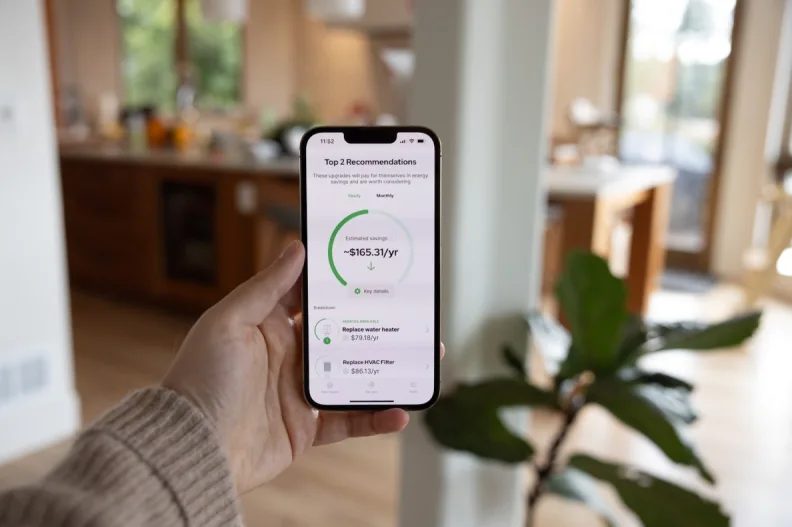
HomeBoost mails customers a BoostBox, a compact kit that includes an infrared camera, a blacklight, and a link to an app. The app guides homeowners through a step-by-step inspection. As users scan rooms:
- The infrared camera reveals where cold or hot air is leaking.
- The blacklight highlights lighting that could be upgraded to more efficient alternatives.
After the scan, the app automatically generates a report. The report prioritizes cost-effective upgrades and lists available rebates based on the homeowner's location.
How HomeBoost compares to traditional audits
Many utilities offer in-person energy audits, often working with third-party auditors. But Tobaccowala found those services can vary in quality. Some customers felt auditors focused more on selling expensive upgrades than on impartial recommendations.
HomeBoost aims to be faster and less costly. At $99, the DIY BoostBox costs about a quarter of a traditional in-person assessment. Utilities sometimes subsidize or cover the cost. For example:
- Omaha Public Power District pays for all but $19 of the BoostBox cost.
- Central Hudson covers the full cost when homeowners borrow the BoostBox from a participating public library.
- Avista and other utilities have signed similar partnerships.
Options for homeowners and professionals
Homeowners who prefer help can hire professionals. Dedicated auditors often spend two to ten hours assessing homes and preparing reports. To support that market, HomeBoost offers a professional version of its app so auditors can serve more customers efficiently.
The startup is also testing a contractor-matching feature. Contractors receive project details ahead of time, making it easier to provide accurate estimates and complete upgrades. For contractors, HomeBoost becomes a steady lead source.
Climate impact and alignment
By linking consumers, utilities, and contractors, Tobaccowala aims for HomeBoost to deliver measurable energy savings. Everyone benefits: homeowners lower utility bills, utilities reduce demand, and emissions fall as inefficient systems are upgraded.
Why this matters beyond energy bills
Home energy efficiency tackles both household costs and broader climate goals. Simple fixes—better insulation, LED lighting, sealing air leaks—can reduce energy use significantly at relatively low cost, especially when rebates and contractor support are available.
About the author
Tim De Chant is a senior climate reporter at TechCrunch. He has written for publications including Wired, the Chicago Tribune, and Ars Technica. De Chant teaches in MIT's Graduate Program in Science Writing and earned a PhD in environmental science, policy, and management from UC Berkeley. You can contact him at [email protected].
Note: This article focuses on home energy assessment innovations and consumer adoption. For related coverage, see news on utilities, rebates, smart home devices, and contractor marketplaces, as well as gaming news ecosystems for broader lifestyle tech trends.
 TGLIST.COM.UA
Comments
No comments
Add Comment