Gaming
Cassette Boy: Retro Puzzle Adventure
4 min read
01.02.2026
Cassette Boy blends retro Zelda vibes with perspective-based puzzles. Explore, rotate the camera, and solve clever visibility mechanics.
Cassette Boy: A Retro-Inspired Puzzle Adventure
Cassette Boy wears its influences on its sleeve. The game blends top-down exploration reminiscent of classic Zelda titles with a cozy hometown hub like older Pokémon games. Its blocky 3D visuals call to mind Minecraft, and save points are campfire-style checkpoints that reset the world in a way fans of FromSoftware will recognize. A consistent green tint even evokes the look of an original Game Boy screen. Despite these clear nods to the past, Cassette Boy feels fresh thanks to clever mechanics and brain-teasing puzzles.
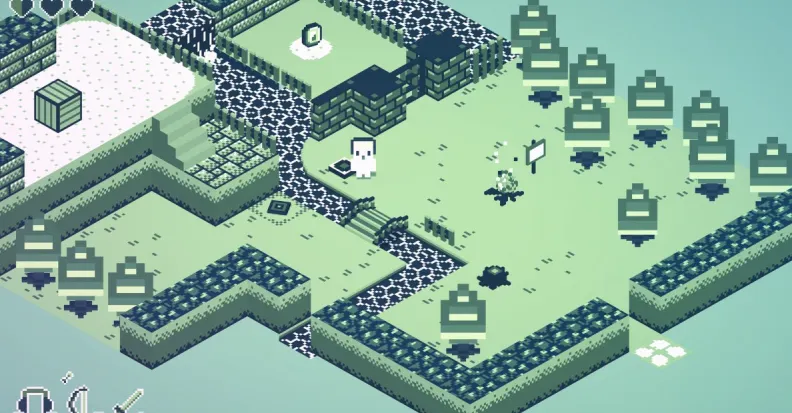
Core mechanic: visibility equals existence
The game's standout idea is simple and brilliant: objects and enemies only "exist" when on-screen. If something is off-camera, it becomes frozen in place and cannot interact with or harm the player. This mechanic loosely references ideas from quantum mechanics, but it's presented in an accessible, playful way.
- If you push a block behind a wall, it no longer blocks your path.
- An enemy that goes fully out of view stops moving and becomes harmless.
- Because off-screen entities are frozen, you also can't damage them until they reappear.
To manipulate this system, you can rotate the camera to eight compass points using a shoulder button—north, northeast, east, etc. Turning the camera can make an invisible object "reappear" and become physical again, which creates layered perspective puzzles.
"If you can't see something in the game, it ceases to 'exist' and remains frozen until it's visible again."
Example puzzle: perspective over brute force
Early in the game you encounter a river with a button that spawns a platform when held down. The familiar Zelda solution—pushing a boulder onto the button—doesn't work here because you can't pick up the boulder. Instead, you step on the button and rotate the camera so the boulder fully covers it. The button becomes frozen in its pressed state, letting you use the platform to cross the river. This kind of puzzle rewards lateral thinking and camera-based experimentation rather than muscle memory or inventory tricks.
Tools, combat, and progression
Cassette Boy expands its puzzle toolkit with items and abilities. Examples include:
- A bow and arrow to hit distant switches or enemies.
- Cassette tapes that grant special powers—such as seeing bombable walls or shrinking the player.
- Blocky boss fights that test both combat and puzzle skills to earn moon fragments, the main collectible that drives progression.
When these systems click, exploration and puzzle-solving feel highly satisfying. Rooms invite detailed scrutiny, and discovering hidden treasures tucked just out of view becomes a rewarding loop.
Retro difficulty and intentional obtuseness
Not every design choice is modern convenience. Cassette Boy leans into older game design philosophies, and that can feel frustrating. There are no in-game maps, and the main quest often requires talking to a very specific NPC at the right moment. The only indicator is a speech bubble above someone's head, which can make progression unclear. After collecting a moon fragment, the game returns you to town without clear direction, so you may spend time searching NPCs to find the next objective.
Some puzzles are genuinely puzzling. During my roughly eight-hour playthrough, I often used a full-game walkthrough for hints. That said, this obtuseness appears deliberate. It channels the sense of discovery players experienced with classic Zelda and Pokémon games, where getting lost and eventually finding the solution felt rewarding. Even modern designers—like those behind Breath of the Wild—note that getting lost can be a positive experience.
Why Cassette Boy works
Cassette Boy captures an old-school spirit while adding a unique, camera-driven twist. The game encourages exploration, forces new perspectives, and rewards players who experiment with visibility and positioning. Despite occasional frustration, the payoff—clever puzzles, satisfying boss encounters, and the joy of unearthing secrets—makes the journey worthwhile.
Availability and final thoughts
Cassette Boy is available now on PC, PlayStation, Xbox, and Nintendo Switch. For readers following gaming news, this title is worth checking out if you enjoy retro-inspired adventures that emphasize puzzle design and perspective mechanics.
By Jay Peters
 TGLIST.COM.UA
Comments
No comments
Add Comment