Login Sign Up
Advert
Your ad spot
Reserve this exclusive slot for the selected period.
Buy advertising →
Gaming

How a Group of Hackers Unleashed Kinect from Xbox

3 min read 14.12.2025

The story of how hackers unlocked Kinect for PC, transforming it from a gaming device into a revolutionary tool for robotics and creativity.

Image for article - How a Group of Hackers Unleashed Kinect from Xbox
Advert
Your ad spot
Reserve this exclusive slot for the selected period.
Buy advertising →

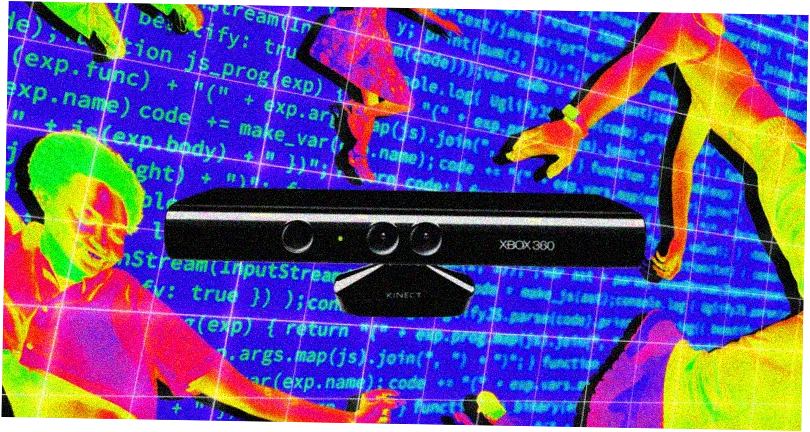
In 2010, when Microsoft introduced Kinect, it positioned it as a revolutionary gaming device. With the help of a camera, players could wave an imaginary lightsaber or throw a ball, all of which was displayed on the screen. However, fifteen years later, Kinect became a symbol of an expensive failure — the company underestimated the demand for motion-controlled games. Despite this, Kinect remained a groundbreaking technology, but not just for gaming. It changed the game in robotics, was briefly used in pornography, and is now sold as a ghost-hunting toy.
How a group of hackers freed Kinect from Xbox

All of this was made possible by a community of hackers who created open-source drivers for Kinect, liberating it from the limitations of Xbox 360 and opening new horizons for experimentation, creativity, and commercial development. Memo Akten, an artist and professor at the University of California, San Diego, notes that technologically Kinect did not invent anything fundamentally new: the camera projected a grid of infrared dots and determined depth by their deformation, as well as recognized human limbs and gestures. Similar systems previously cost between $5,000 and $12,000, while Microsoft sold its version for $150.

Kyle Machulis, CEO of Nonpolynomial and founder of buttplug.io, worked with systems costing up to $250,000 but saw in Kinect an opportunity to democratize this technology. On November 4, 2010, he purchased Kinect for disassembly, and soon Adafruit announced a contest with a reward of up to $3,000 for confirming Kinect's operation on any operating system. Developing the drivers was challenging: it required analyzing the traffic between Kinect and Xbox 360 using a special USB sniffer. Adafruit acquired this device and published the logs, allowing the community to begin open-source work.

Advert
Your ad spot
Reserve this exclusive slot for the selected period.
Buy advertising →

Eventually, hacker AlexP showed a video of how to control the Kinect motor on a PC, which raised alarms at Microsoft. Later, he demonstrated working with depth and RGB images. Although he did not claim the prize, his company Code Laboratories offered $10,000 for opening the code, which sparked controversy. The OpenKinect community, including Hector Marcan, who got Kinect running on Linux in six days, joined forces for further driver development. Theo Watson worked on MacOS support, and their collaboration yielded significant results. The first libfreenect drivers allowed for obtaining only raw depth data without body tracking, but this was enough for numerous creative experiments — from 3D painting to drone control.

Thanks to the open drivers, Kinect became an accessible tool in robotics, medicine, education, and even for controlling adult toys. In 2013, Apple acquired PrimeSense, the company behind Kinect technology, leading to the cessation of the device's production and a shift in Microsoft's direction. However, the technology continues to be used in many Apple devices for facial recognition and 3D mapping.

Now the tech world has changed: hacker communities have become more organized and widespread, and open-source work has become more common. Artificial intelligence is now capable of performing many functions that were once the prerogative of Kinect, faster and better, using standard cameras. While this signifies the end of the Kinect era, its legacy lives on in the openness and creativity it inspired.

Share Facebook X Telegram

Comments

No comments

Add Comment

0 / 2000