 TGLIST.COM.UA
Astronomers using the James Webb Space Telescope have set a new record by discovering the oldest and most distant galaxy known to humanity. In a pre-published study currently undergoing peer review, scientists describe this primitive galaxy named MoM z14. According to researchers' calculations, it formed just 280 million years after the Big Bang, surpassing the previous record set last year by the galaxy JADES-GS-Z14-0, which emerged 290 million years after the universe began. In comparison, the age of the universe is estimated to be about 13.8 billion years, while Earth is around 4.543 billion years old. No one expected the James Webb Telescope to observe objects close in age to the Big Bang just a few years after its launch.
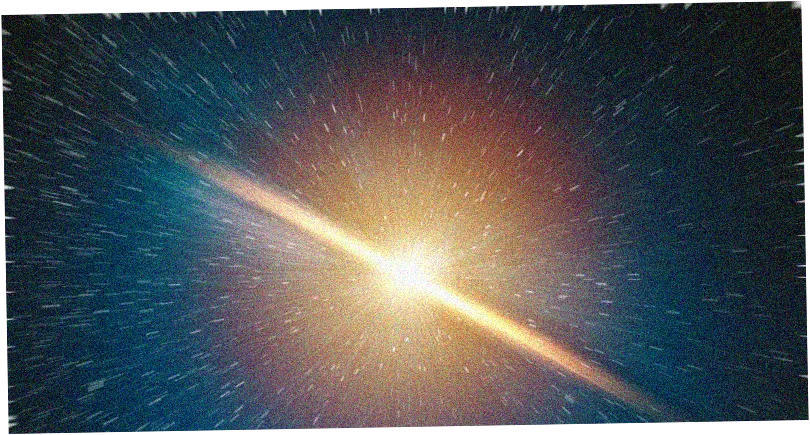
Due to the finite speed of light — 300,000 kilometers per second — and the expansion of space, observing distant objects allows us to see them as they were in the past. For example, when it is said that MoM z14 is approximately 13.5 billion years old, it means that the light from this galaxy has traveled that distance to reach us. To date, no instrument has detected objects that are simultaneously farther and older than this galaxy.
The James Webb Telescope uses infrared sensors, allowing us to look deep into space and explore the early stages of the universe's development. As the universe expands, nearly all galaxies are moving away from us, and their light receives a longer wavelength — a phenomenon known as redshift. The earlier a galaxy formed and the farther away it is, the more pronounced this effect becomes.
Comments
No comments
Add Comment