Moreover, what you actually do on them turned out to be not so important.
Watching videos, messaging in chat apps, and endlessly scrolling through social media feeds in bed can seriously harm your sleep. This conclusion was reached by Norwegian researchers who studied the behavior of more than 45,000 students aged 18 to 28. According to the results published in the journal Frontiers in Psychiatry, using any screen devices in bed increases the risk of insomnia by 59% and deprives an average of 24 minutes of sleep each night.
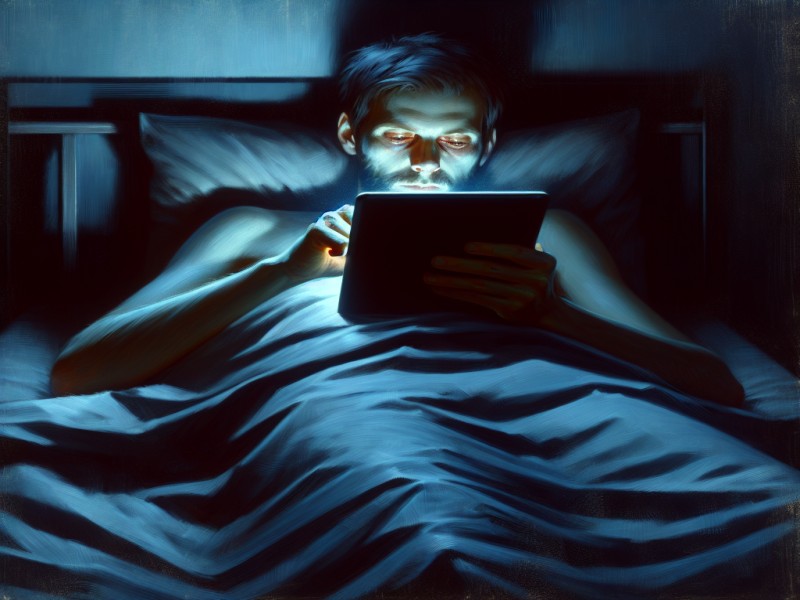
Article image generated by artificial intelligence
Most previous studies of this kind were conducted among teenagers. The new study relies on data from the large-scale Students' Health and Well-being Study 2022, which involved students from all over Norway. Participants reported which devices and applications they use in bed and how this affects their sleep. Additionally, researchers analyzed bedtime, the duration of falling asleep, sleep quality, and levels of daytime sleepiness.
Notably, the type of activity itself - for example, browsing social media or watching series - turned out to be not so important. According to clinical psychologist Gunnild Jonsen Hyetland from the Norwegian Institute of Public Health, the overall time spent in front of a screen has a stronger impact on sleep quality. The main harm, researchers believe, lies in the fact that gadgets simply take away precious minutes meant for rest.
Although social media is traditionally considered particularly harmful to sleep due to its interactive and emotionally stimulating nature, the study's results did not confirm this. On the contrary, students who use such platforms sometimes reported even higher sleep quality, although the authors emphasize that this does not prove a causal relationship - perhaps those who sleep worse simply choose other types of activities.
The study also has limitations: the sample includes only Norwegian students, so the results may not reflect situations in other countries and age groups. Additionally, several screen activities were grouped into general categories, which may have concealed more subtle differences.
For those suffering from sleep problems, experts recommend reducing device use in bed or avoiding them altogether at least 30-60 minutes before sleep. This simple rule can help improve the quality of nighttime rest and reduce daytime fatigue.
We and selected third parties use cookies or similar technologies for technical purposes and, with your consent, for other purposes (“basic interactions & functionalities” and “measurement”) as specified in the Cookie policy.
You can freely give, deny, or withdraw your consent at any time.
You can consent to the use of such technologies by using the “Accept” button. By closing this notice, you continue without accepting.
 TGLIST.COM.UA
Comments
No comments
Add Comment