Researchers have focused particular attention on one of the boiler rooms.
The new digital model of the "Titanic" has shed light on the tragic events that unfolded after the liner collided with an iceberg in 1912. Full-size 3D scanning of the sunken ship revealed how the vessel literally split in half during its descent into the Atlantic, claiming the lives of 1,500 people.
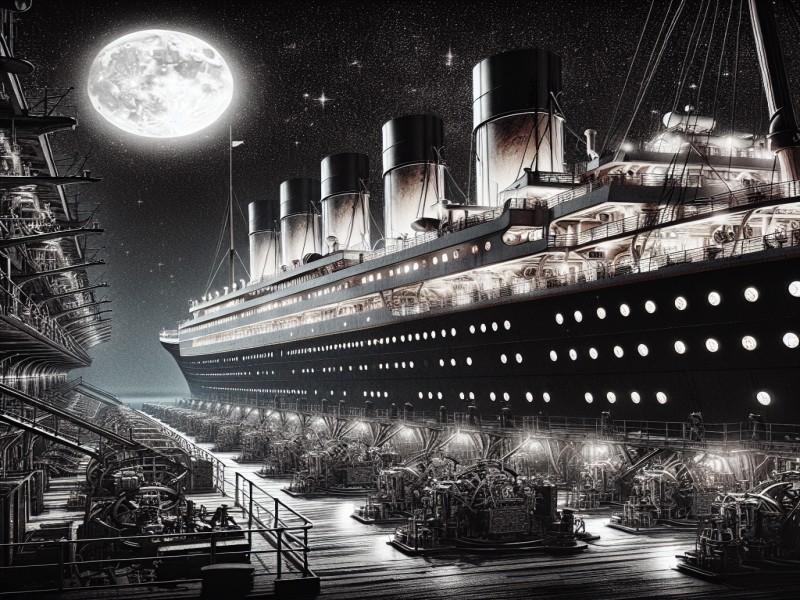
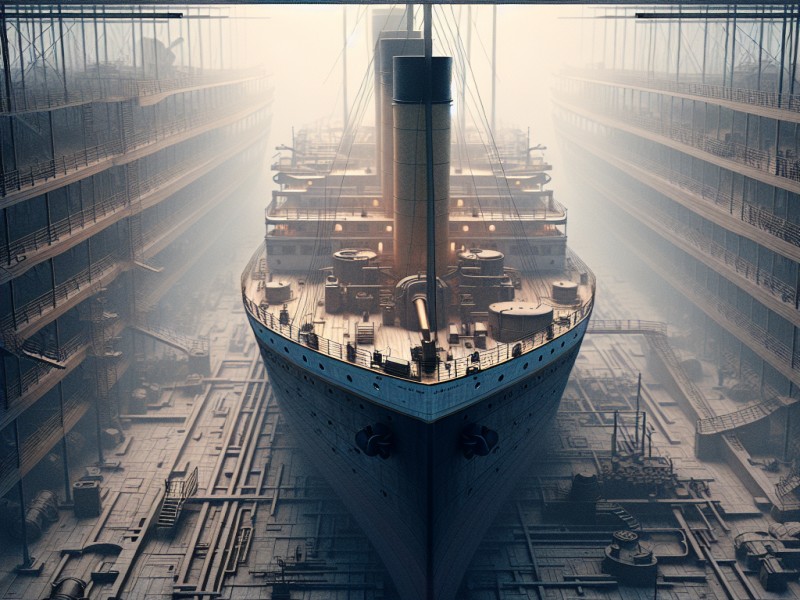
Article image generated by artificial intelligence
The unique model, compiled from over 700,000 images, allowed for the first time to see the wreckage of the ship in its entirety, rather than in fragments as was the case during submersible dives. The bow rests on the seabed vertically, as if the ship stopped midway, while the stern lies 600 meters away in a mangled mass of metal.
Researchers have focused particular attention on one of the boiler rooms. The scan shows that some of the boilers are concave, which may indicate their operation even at the moment of sinking. Additionally, an open steam valve was found at the stern - a sign that the electricity generation system continued to function. These findings confirm eyewitness accounts that the lighting remained on until the very end.
The analysis of the digital model combined with computer simulation enabled scientists from University College London to model the damage to the hull. Calculations showed that the iceberg left a series of narrow punctures the size of a sheet of paper on the hull, but due to their length, they flooded six watertight compartments - this became the critical threshold after which the ship's sinking was inevitable.
Many details of the tragedy remain hidden beneath layers of silt; however, new technologies are opening access to previously unavailable information. Researchers note that it will take years to fully study all the data from the 3D scanning.
We and selected third parties use cookies or similar technologies for technical purposes and, with your consent, for other purposes (“basic interactions & functionalities” and “measurement”) as specified in the Cookie policy.
You can freely give, deny, or withdraw your consent at any time.
You can consent to the use of such technologies by using the “Accept” button. By closing this notice, you continue without accepting.
 TGLIST.COM.UA
Comments
No comments
Add Comment